Where to Stay in Death Valley National Park (2026)

DISCLOSURE: This post may contain affiliate links. If you purchase after clicking one of my links, I may earn a small commission at no extra cost to you. As an Amazon Associate, I earn from qualifying purchases. For more information, see my disclaimer.
Planning ahead and deciding where to stay in Death Valley National Park can help you save hours driving and optimize your time to explore the park. Whether you’re looking for a developed campground, a hotel in Furnace Creek, or a private rental just outside of the park, choosing the right base camp ultimately comes down to your budget and planned activities. Based on my personal stays in Death Valley, this guide breaks down the best areas to stay, from camping options to top-rated lodging, so you can minimize drive times and hit the trails faster.
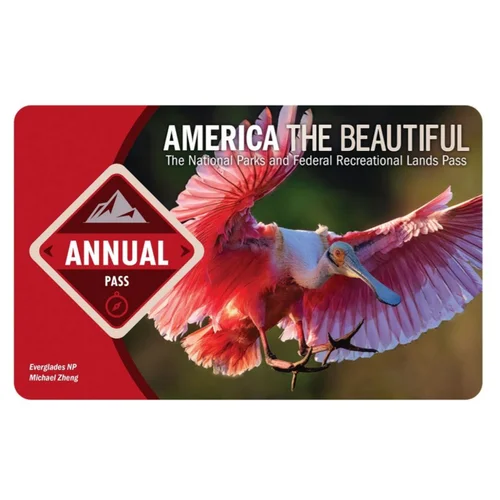
America the Beautiful Pass
America the Beautiful Pass Unlock a year of unforgettable adventures with the America the Beautiful Pass, your all-access ticket to over 2,000 federal recreation sites across the United States. From iconic National Parks to hidden…
Where to stay in Death Valley National Park
1. Hotels near Furnace Creek
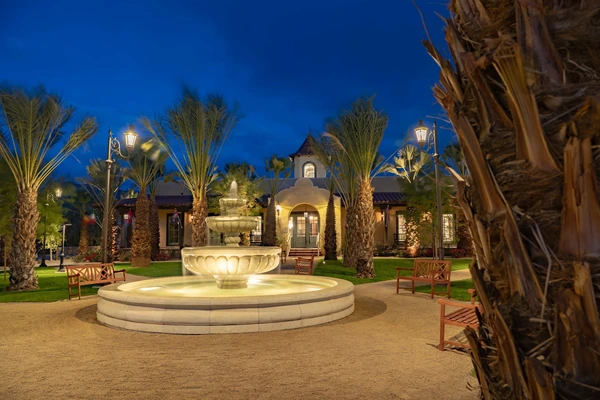
Furnace Creek is the most central location within Death Valley National Park, and it’s a great base for most of what you might want to do inside the park, such as Badwater Basin (and Lake Manly), Zabriskie Point, etc…
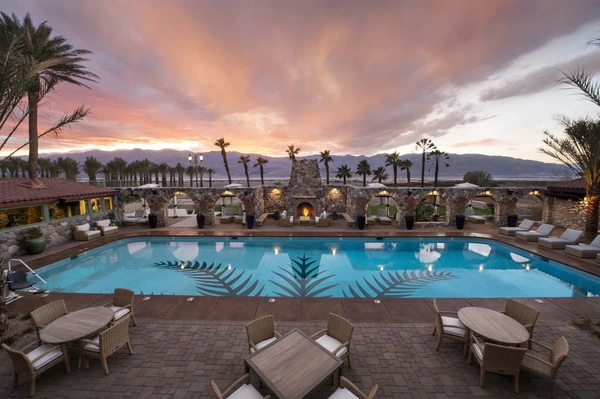
There are two hotel options at Furnace Creek, and while I usually camp when visiting, I’ve also stayed at both hotels multiple times and highly recommend them.
- The Ranch at Death Valley: a budget-friendly stay, swimming pool, and onsite restaurants and shops (including an ice cream parlor!), and it’s also the closest to the golf course.
- The Inn at Death Valley: a more upscale experience with a swimming pool and an on-site restaurant. The Inn adds a special touch by offering guests golf carts to get to their rooms, something that’s surprisingly fun to drive around.
I wouldn’t hesitate to stay at either hotel again on future trips.
2. Hotels in Stovepipe Wells
If you want to stay in the heart of Death Valley without paying the higher rates at Furnace Creek, Stovepipe Wells is the best mid-park alternative. Located about 30 minutes northwest of Furnace Creek right along CA-190, it puts you just minutes from the Mesquite Flat Sand Dunes, making it an unbeatable base camp for sunrise, sunset and night sky photography.
- Stovepipe Wells Village Hotel: A classic, western-style rustic hotel offering comfortable, updated rooms with air conditioning and essential amenities. It’s a lower-cost option compared to Furnace Creek lodging while still keeping you right inside the park boundaries.
- Key Amenities: Outdoor swimming pool, Badwater Saloon, Toll Road Restaurant, on-site general store, gas station (with EV charging), and free Wi-Fi.
- Panamint Springs Resort: Located further west near the park entrance, this rustic resort features simple motel rooms, a restaurant, a full bar, and basic cabin rentals. It’s ideal if you’re entering or exiting the park via the Eastern Sierra (Lone Pine side).
Stovepipe Wells Village Hotel
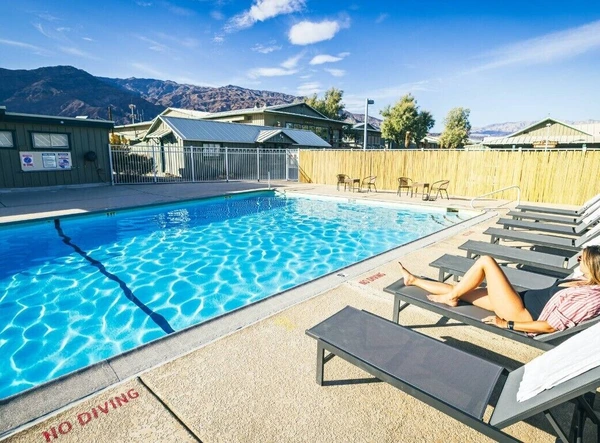
✅ Great breakfast and swimming pool!
✅ Excellent guest experience
✅ Convenient location
Panamint Springs Resort
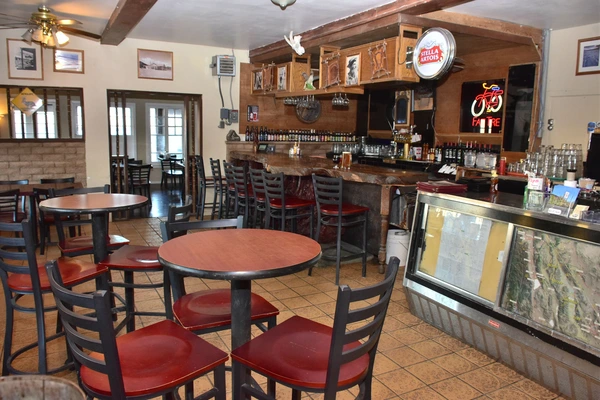
✅ Budget friendly
✅ Excellent guest experience
✅ Convenient location
3. Camping in Death Valley
There are many campgrounds to choose from in Death Valley, whether you seek developed or primitive options. I have stayed at many of the campgrounds, and I’ve always had a great experience there. I don’t think you can go wrong with any of them.
Furnace Creek Campground
Furnace Creek campground is located right near the Visitor Center at 190 feet below sea level. I’ve stayed at this campground many times across every season of the year, and it is always very well-maintained with clean restrooms and reliable water spigots and fountains.
- Operating Season: Open year-round.
- Sites & Hookups: Offers dry RV/tent sites, full RV hookups, and group sites.
- Peak Season (Oct 15 – Apr 15): Reservations are required and can be booked up to 6 months in advance.
- Off-Peak Season (Late April – Mid-October): Drops to 41 sites, operating on a first-come, first-served basis.
Texas Springs Campground
Texas Springs is hands-down my favorite campground in Death Valley! Located in the hills just above Furnace Creek, it allows you to hike straight into the hills right from your campsite.
If you’re into night sky photography, this is the best campground in the Furnace Creek area for capturing the Milky Way, especially if you snag a site in the upper loop. It’s ideal for early-season astrophotography when you want to shoot late at night without waking up neighboring campers by driving out.
- Operating Season: Seasonal (Open late fall through mid-April).
- Reservations: First-come, first-served only.
- Payment: Fees are payable at either of the two pay stations on-site.
- Best For: Direct trail access, elevated views, and Milky Way astrophotography.
Sunset Campground
Sunset Campground is an extremely bare, exposed spot with no vegetation where you’ll be camping right on the desert gravel. It’s essentially a large gravel parking area with very little ambiance, but it serves as a dependable overflow option during the busy season.
It operates seasonally from late fall to mid-April on a first-come, first-served basis. Keep in mind that individual sites do not have picnic tables or fire rings, and campfires are not allowed at your site. However, there are a few community fire grates located within the campground if you want a shared fire.
Stovepipe Wells Campground
This campground opens seasonally, typically late fall through mid-to-late April. It is located next to the Stovepipe Wells amenities and ranger station. The campground is first-come, first-served campground located at sea level, and you can pay your fee at the pay station near the entrance. You can also purchase pool and shower passes and use free hotel wifi!
Emigrant Campground
Emigrant campground is a first come, first-served tent-only campground on the side of CA-190 at 2100′ feet in elevation. I only stayed there once several years ago, and it was extremely windy that night. It is a very small campground with only 10 sites southwest of Stovepipe Wells Ranger Station. There is a toilet nearby down the parking lot.
⚠️ The Emigrant campground has been closed since late August 2025 due to flood damage and there is no estimated repair date.
Wildrose Campground
Located at 4,100 feet in the Panamint Mountains, Wildrose offers 23 free, first-come, first-served sites. It provides a rustic, off-grid experience with year-round trash collection, but has no cell service or potable water (nearest water is 31 miles north).
Mesquite Spring Campground
Situated at 1,800 feet in northern Death Valley, Mesquite Spring features 40 first-come, first-served sites equipped with fire grates and picnic tables. While there is no cell reception, it includes potable water, a dump station, trash collection, and seasonal staff on site.
Primitive Camping in Death Valley
For a more remote backcountry experience, Death Valley offers several free, first-come, first-served primitive campgrounds: Thorndike (6 sites at 7,400 ft) and Mahogany Flat (9 sites at 8,200 ft near Telescope Peak) tucked into pinyon pine forests, alongside lower-elevation spots like Eureka Dunes (7 sites at 2,880 ft), Homestake (10 sites at 3,785 ft), and the clothing-optional Saline Valley (15 sites at 1,375 ft).
⚠️ Crucial Note: Every single one of these sites strictly requires a high-clearance 4×4 vehicle with all-terrain tires to navigate rough, unpaved pass roads. These locations offer zero services or potable water, so you must carry in all your water and food, and pack out all trash.
Backcountry Camping
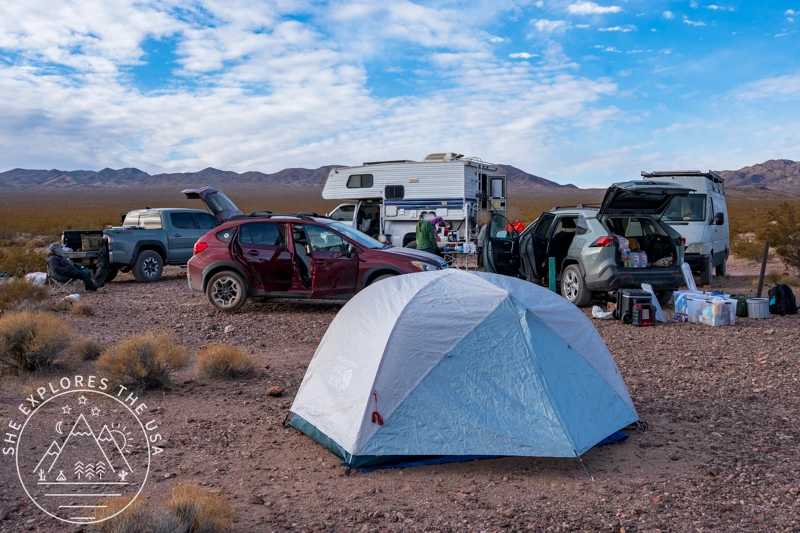
If you prefer to get further off the grid, Death Valley permits roadside backcountry camping along specific dirt roads. I’ve camped with a group of friends along both Hole in the Wall Road and Lake Hill Road over the years, both offered incredible starry nights and true desert solitude. While an AWD vehicle with decent ground clearance got us through during our trips, road conditions in the park change constantly. Always check current road status and confirm details with rangers at the visitor center when picking up your permit.
Essential Backcountry Rules & Info:
- Permits & Fees: Mandatory online permits ($10/night) are required for popular corridors like Hole in the Wall, Echo Canyon, Cottonwood/Marble Canyon, and Greenwater Valley. For other backcountry dirt roads, free permits are available online or in person and are strongly recommended.
- Location Rules: Camping is only allowed along designated dirt roads at least 1 mile past any paved road or “day use only” junction. Camping is strictly prohibited on the valley floor, along paved roads, or on day-use dirt roads like Titus Canyon and West Side Road.
- Campsite Setup: Park directly adjacent to the road in previously disturbed areas, driving off-road is strictly illegal to protect fragile desert soils. Groups are capped at 12 people and 4 vehicles.
- Fire & Water: No open ground fires are permitted (pack a firepan or stick to propane campstoves, and pack out all ash). Camp at least 100 yards away from natural water sources, carry at least 1 gallon of water per person per day, and pack out all trash and human waste.
Private Camping in Death Valley
There are three privately operated campground within the national park that you can also reserve all year around. They are Ohyü RV Park, The Ranch at Death Valley, and Panamint Springs Resort. I have not stayed at any of them yet, so I cannot offer a recommendation on one above another at this time.
3. Rentals near Death Valley
Discover the perfect getaway with VRBO by exploring vacation rentals near Death Valley National Park. Whether you’re planning a family trip, a group adventure, or a solo escape, VRBO offers a variety of accommodations to suit your needs. Enjoy amenities like WiFi, pools, and fully equipped kitchens, ensuring a comfortable stay in this stunning desert region. You’ll also find pet-friendly, non-smoking, and accessible options, making it easy to find the ideal rental for your journey. With VRBO, your Death Valley experience can be as relaxing or adventurous as you wish.
- Beatty, Nevada: ~45 minutes to Stovepipe Wells/Furnace Creek (best budget option).
- Pahrump, Nevada: ~1 hour to Furnace Creek (best for full amenities, grocery stores, and gas).
- Lone Pine, California: ~1 hour to Panamint Springs / West entrance (best if arriving from the Eastern Sierra).
Find Death Valley Accommodations on the Map
Because Death Valley National Park spans over 3.4 million acres, choosing a base camp visually is the easiest way to avoid accidental 2-hour drives to simple trailheads.
Use this interactive map to compare lodging locations across the three main zones:
- Central Park (Furnace Creek & Stovepipe Wells): Look here if you want minimal driving times to Badwater Basin, Zabriskie Point, Artist’s Palette, and Mesquite Flat Sand Dunes.
- Western Park (Panamint Springs): Ideal for exploring Darwin Falls or entering/exiting via Highway 190 west.
- Gateway Towns (Beatty, Pahrump, & Lone Pine): Look along the map borders for private VRBOs, Airbnbs, and budget-friendly hotels if in-park lodging is booked solid.
Pro Tip: Zoom in on Furnace Creek on the map below to compare proximity between Furnace Creek Campground, Texas Springs, The Ranch, and The Inn!
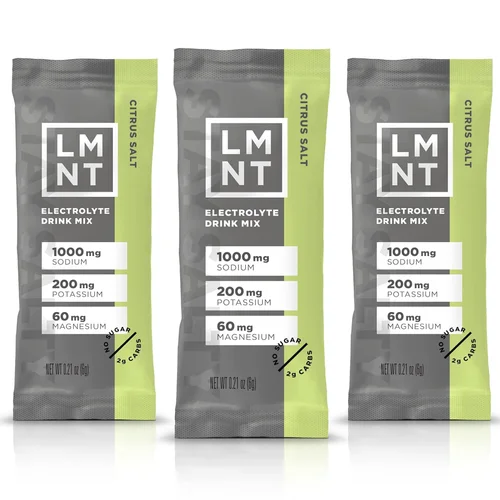
Recommended Gear to Safely Visit Death Valley
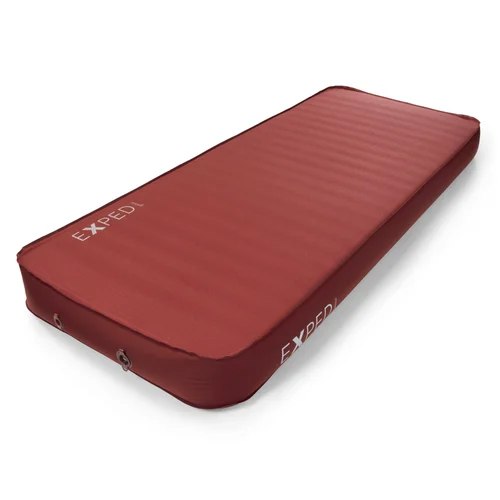
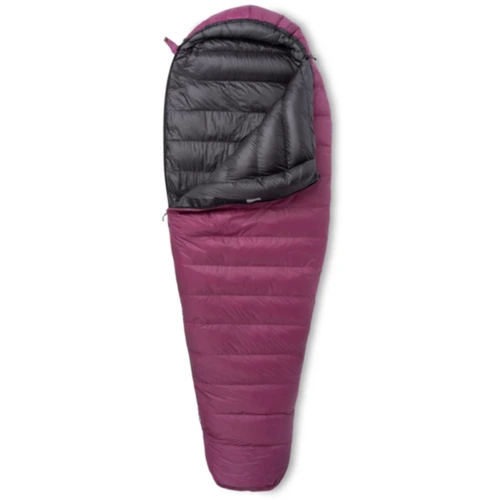
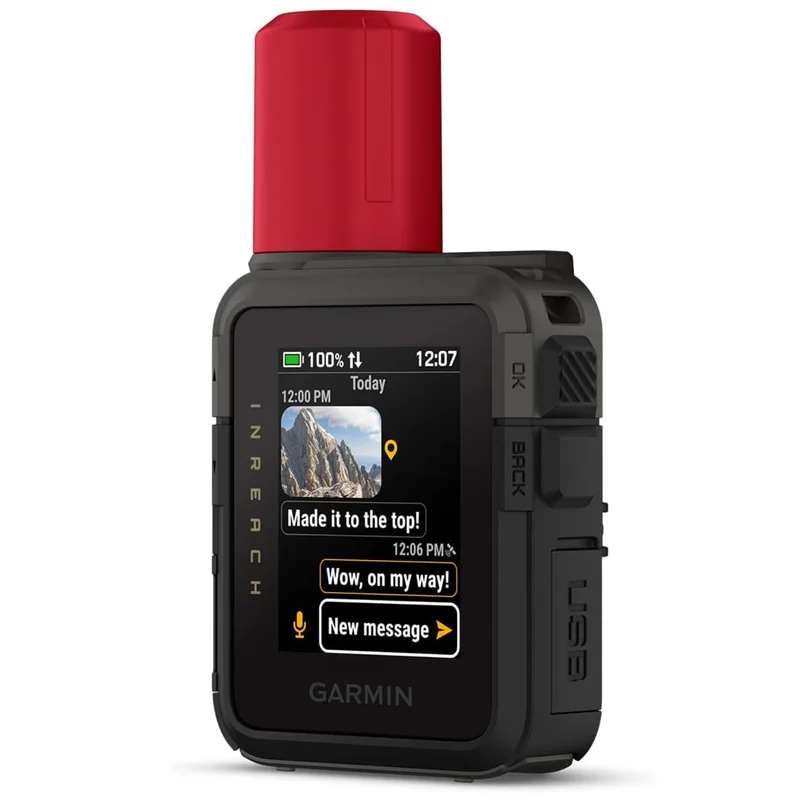
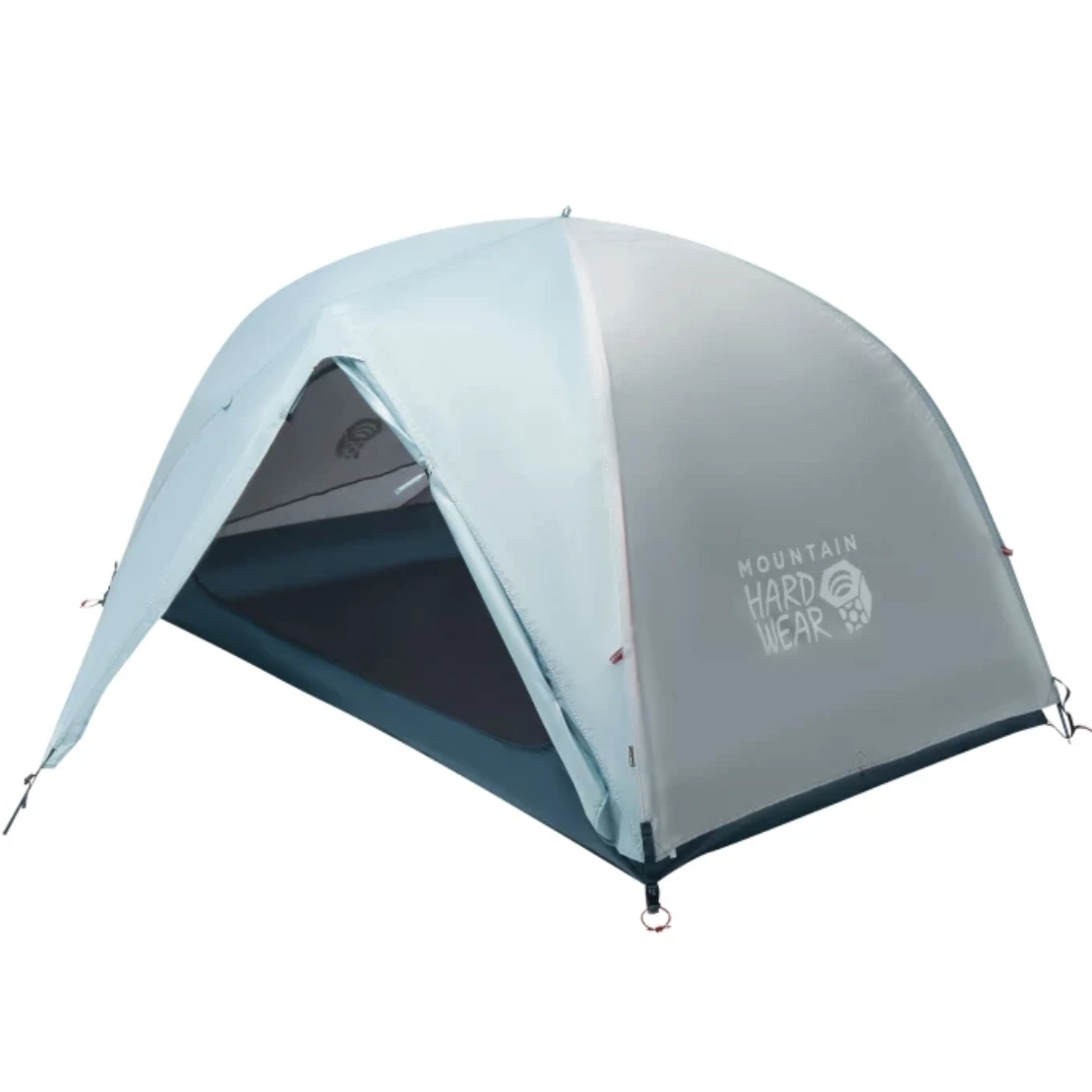
Below are some of my favorite items I always rely on for all my trips to Death Valley National Park! For more gear ideas, check out my curated outdoor gear shop!



DVNP Day Hikes Map
This map contains detailed maps for 18 of Death Valley’s finest day hikes (well-known hikes and a few off-the-beaten-path trails!)


Garmin GPSMAP 67i Review & Which InReach Suits You?
Review of the Garmin GPSMAP 67i and comparison to the GPSMAP 66i, Mini 2 and InReach Messenger plus[…]…
FAQ about Where to Stay in Death Valley National Park
Is it better to stay inside or outside Death Valley?
Staying inside the park (Furnace Creek or Stovepipe Wells) saves you 1 to 2 hours of driving each day and lets you catch sunrise/sunset more easily. Staying outside (Beatty, Pahrump, or Lone Pine) offers cheaper lodging and more dining options, but requires much longer drive times into the park.
How far in advance should I book lodging or camping in Death Valley?
For the peak season (October through April), book hotels and Furnace Creek Campground reservations 6 months in advance. First-come, first-served campgrounds often fill up early in the day during spring wildflower season and holiday weekends. Arriving in the middle of the week may give you an advantage for first-come, first-served campgrounds.
Can you stay in Death Valley without a reservation?
Yes! Several campgrounds (like Texas Springs, Sunset, and Stovepipe Wells) operate on a first-come, first-served basis. If those are full, primitive/backcountry camping is an option if you have a suitable vehicle. Just remember to always check current conditions on the website before you enter the park, and again at the visitor center when you get there.
Final Thoughts on Where to Stay in Death Valley National Park
If it’s your first time visiting Death Valley, staying in or near Furnace Creek, whether at The Ranch, The Inn, or Furnace Creek Campground, puts you right in the center of the park’s iconic sights. For night sky lovers and photogs, grab a site at Texas Springs, and always keep an eye on road closures and flood conditions before you head out!
Post originally published on June 10, 2026, and last updated on October 27, 2026.