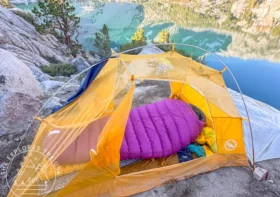
Sticky Tent Rainfly Fix: Using Nikwax to Reproof Your Tent

DISCLOSURE: This post may contain affiliate links. If you purchase after clicking one of my links, I may earn a small commission at no extra cost to you. As an Amazon Associate, I earn from qualifying purchases. For more information, see my disclaimer.
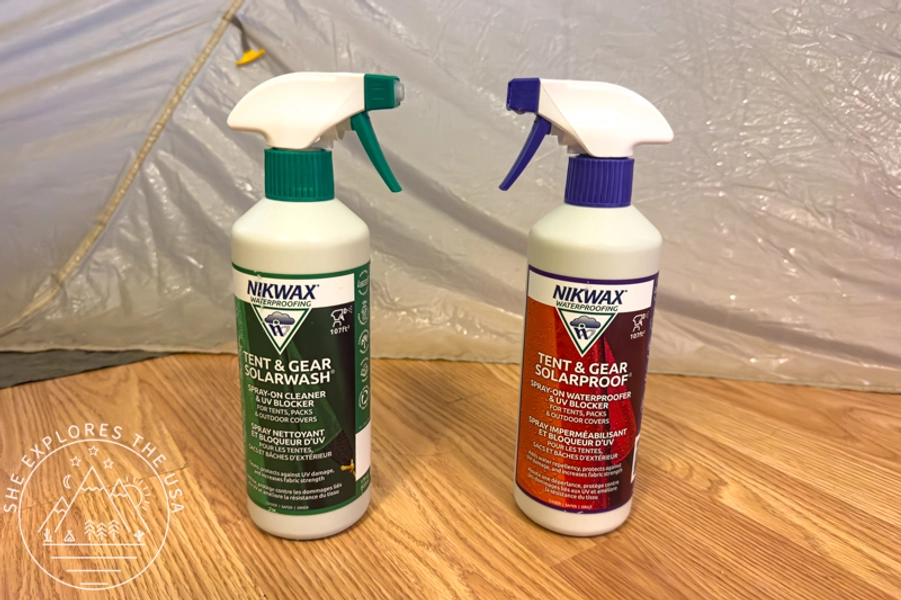
If you have a sticky tent rainfly that has started sticking to itself, you may be wondering if it can be cleaned and waterproofed again rather than replaced. That was the problem I ran into with my six-year-old Big Agnes Tiger Wall UL2, so I decided to try Nikwax Tent & Gear SolarWash and SolarProof. In this post, I’ll explain how I cleaned and reproofed the rainfly, what I thought of the Nikwax products, and how it performed afterward.
TL;DR
If your tent rainfly has started sticking to itself, I succesfully cleaned and reproofed mine with Nikwax Tent & Gear SolarWash and SolarProof:
- Set up the rainfly so you can wet the outer fabric.
- Wash it with SolarWash, working one section at a time, then rinse.
- Apply SolarProof to each section while the fabric is still wet.
- Wait 2 minutes, then wipe off the excess with a damp cloth.
- Let the rainfly air dry completely before storing it loosely.
My six-year-old rainfly stopped sticking to itself afterward, felt softer, and seems to have recovered its waterproof properties.
Nikwax Tent & Gear Duo Pack
Solarwash & Solarproof
- Restores Waterproofing
- Fights UV Damage
- Easy Spray-On Care
Why Was My Sticky Tent Rainfly Sticking to Itself?
I’ve had this tent for about six years and have used it on plenty of backpacking trips every year, (except in 2025 when I suddenly became bedridden in May, and didn’t use this tent again until February 2026!) I don’t always use the rainfly, but when I don’t use it, it would either still be folded up and put it back into the storage pouch, or left on my storage shelf.
I experienced my first condensation in March 2025 (year 5). At the time, I didn’t think much of it because it was really cold that night, and my friends also got condensation, but I had been in similar conditions with no condensation. So it definitely got me thinking a bit because I used the same ventilation as always, and it didn’t happen again on subsequent trips. So I didn’t think about it again.
The rainfly wasn’t actually sticky to the touch. But the fabric had started sticking to itself after being folded in its storage pouch (for too long!), which made it increasingly difficult to unfold without worrying that I was going to tear the fabric.
When I returned to Big Pine Lakes this year, I got rain, hail, thunder and lightning, and there was even a mudslide underneath the tent. All within ten minutes of setting up camp!!! During the storm, the inside of the rainfly was getting wet, and the following morning I had a ton of condensation even though it was no longer raining.
That combination finally made me want to figure out what was happening with the rainfly.
When I started researching why a tent rainfly might become sticky or start sticking to itself, I learned that this can happen as the waterproof coating on the fabric deteriorates over time. Given the age and use of my tent, it seemed like a reasonable explanation for what I was seeing.
I also learned that I probably hadn’t been storing the rainfly the best way. It should ideally be loosely draped rather than compressed in its storage sack, and aired out every 3-4 months when not in use to help prevent mildew and coating damage.



Why I Chose Nikwax
I’d never done this type of tent maintenance before. Until now, my tent care had mostly consisted of getting dirt and debris out when packing up at camp, making repairs with Gear Aid if something got damaged and fixing my cords and guylines.
I initially considered contacting Big Agnes, but while looking through their website I found that they recommended Nikwax products for tent care.
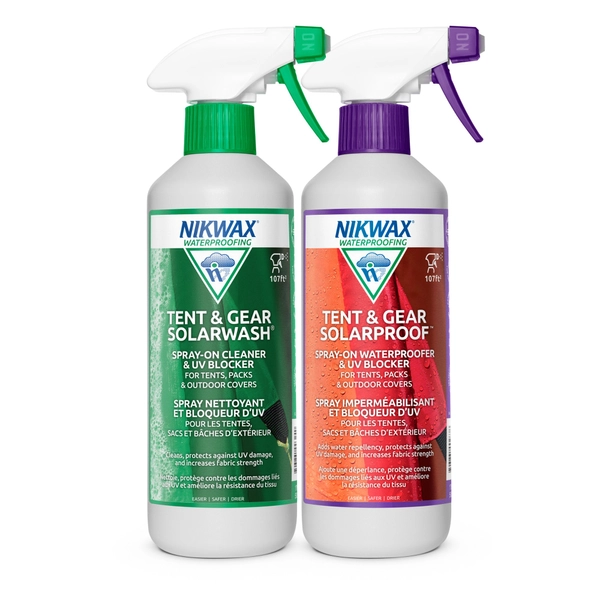
I was petrified to ruin my tent, and I was even nowhere near ready to end my backpacking season, so I decided to buy the Nikwax Tent & Gear Duo Pack, which contains one 500 ml bottle of Tent & Gear SolarWash and one 500 ml bottle of Tent & Gear SolarProof.
SolarWash is the cleaning step, while SolarProof restores water repellency and provides UV protection.
Nikwax Tent & Gear Duo Pack
Solarwash & Solarproof
- Restores Waterproofing
- Fights UV Damage
- Easy Spray-On Care
How I Treated My Big Agnes Tiger Wall UL2
I simply followed the instructions on the bottles and worked on the rainfly one section at a time.
The whole process took me about 45 minutes to an hour, and then I just left the tent set up for the rainfly to air dry overnight.
The only part I had to figure out was where to do it.
I don’t have a garden, and I initially thought I’d take the tent to a park. But once I realized I’d need easy access to water and somewhere I could leave the rainfly to dry completely, I decided to do the whole thing in my tiny living room…
Setting Up the Rainfly
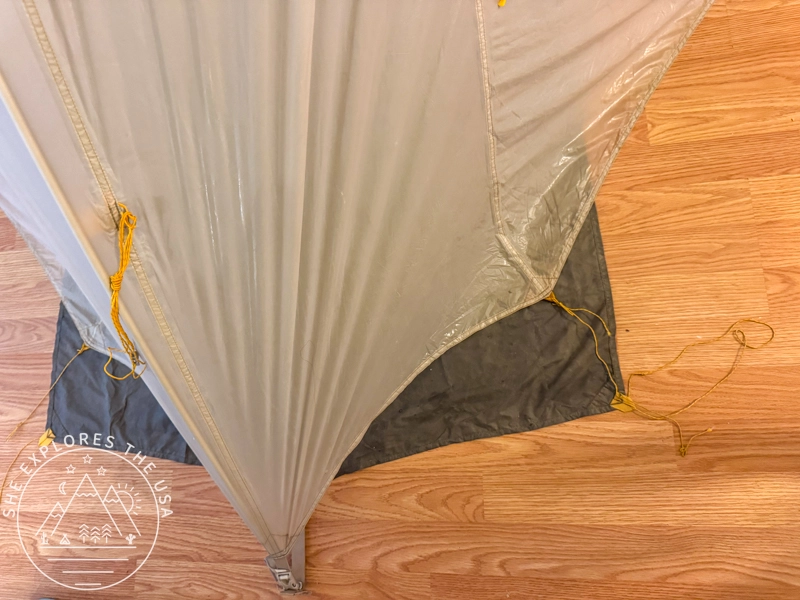
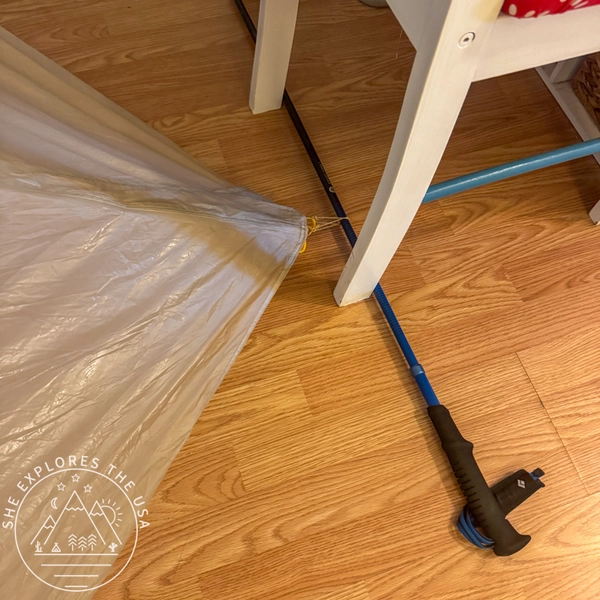
The Tiger Wall UL2 is semi-freestanding, so I set up the footprint and rainfly using the tent poles.
I then put my trekking poles through the loops of the doors to extend the rainfly as much as possible, with a chair holding one of the trekking poles in place.
It wasn’t exactly a normal tent setup, but it gave me enough room to work around the rainfly without having it spread across the floor.
Washing the Rainfly With SolarWash
I used a sponge and a bowl of water to wet one section of the rainfly at a time.
Once the fabric was wet, I sprayed Nikwax Tent & Gear SolarWash over that section and spread it across the fabric. I then rinsed the section with clean water using the sponge again.
The sponge picked up a noticeable amount of dirt, and the water in the bowl turned brown pretty quickly. I changed the water several times as I worked around the rainfly.
Applying SolarProof
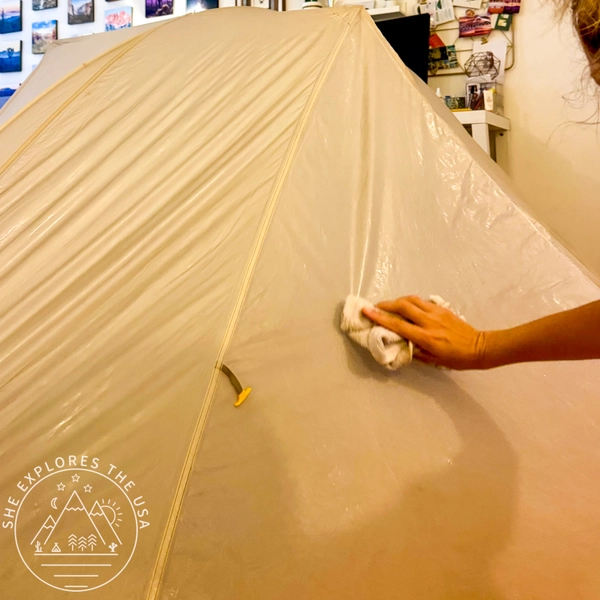
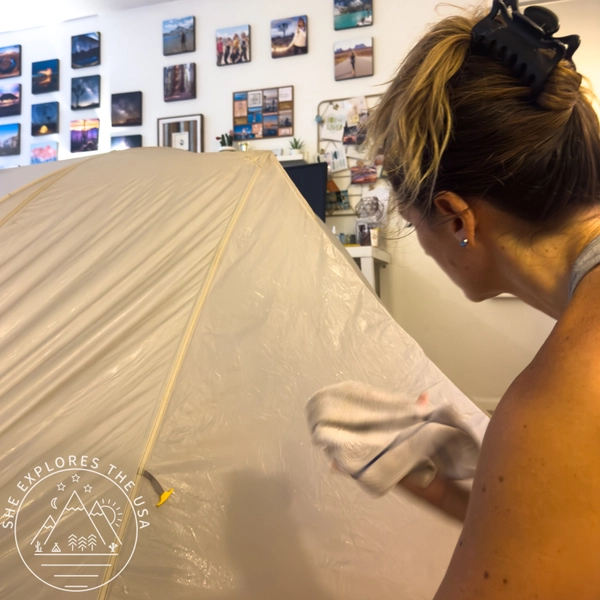
After washing and rinsing each section, I sprayed Nikwax Tent & Gear SolarProof evenly over the same section while it was still wet.
I left it for two minutes, following the instructions on the bottle. While I waited, I started washing the next section of the rainfly.
After two minutes, I used a damp cloth to remove the excess proofing liquid and then let the section air dry.
I repeated the process until I’d worked my way around the entire rainfly.
Once I finished, I left the tent set up as it was, for the rainfly to air dry overnight. The next day, I loosely folded it back and placed it on a shelf in my gear storage closet, but this time, I kept it outside of its stuff sack to give it more breathing room and help prevent the damage risks i mentioned above.
Nikwax Tent & Gear Duo Pack
Solarwash & Solarproof
- Restores Waterproofing
- Fights UV Damage
- Easy Spray-On Care
What Happened After Reproofing?
The first thing I noticed was how soft the rainfly felt once it was dry. It felt more like when I first got it.
It no longer stuck to itself. Instead of having to carefully pull the folded fabric apart, I could unfold it normally again.
Texture, Scent, and Indoor Application
I didn’t notice any change to the color or smell of the fabric.
I had been slightly concerned about the smell because I’d seen reviews from people who described the product as smelling strongly of ammonia. I used it indoors with the windows open, but the smell didn’t bother me at all. To me, it definitely wasn’t as strong as hair dye, and I wouldn’t describe it as smelling like ammonia.
Field Testing & Real-World Performance
I haven’t had the opportunity to put the tent through another major rainstorm since treating it, so I can’t say that the treatment has definitively restored its performance in heavy rain.
I did test the water repellency by pouring water from my nalgene over the rainfly on the next backpacking trip I took after the treatment. The water rolled right off the fabric, much like it did when the tent was new.
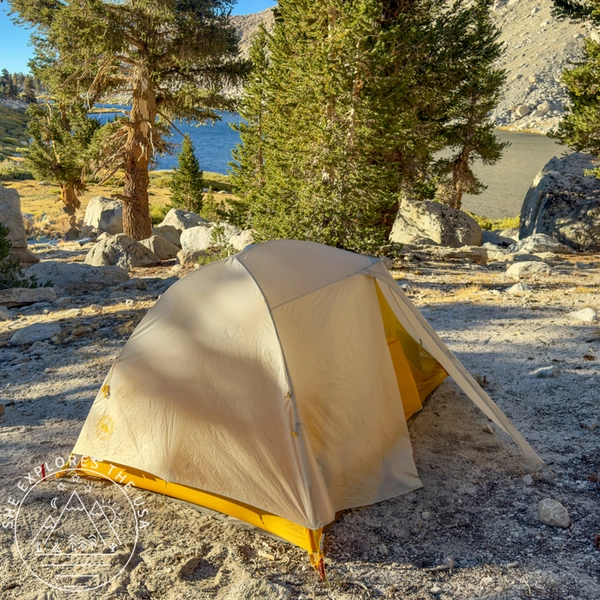
I was also back in the Sierra and slept near an alpine lake again on the second night, in conditions similar to where I’d experienced the condensation just a month prior. And this time, I didn’t get condensation on the rainfly.
It’s now been about a month since I treated it, and I’ve used the tent on two backpacking trips since then. The rainfly has been noticeably easier to unpack and set up because it no longer sticks to itself. so I’m super happy I took the time to maintain my gear properly!!
The Verdict: Full Nikwax Tent & Gear SolarWash and SolarProof Review
Ultimately, bringing my six-year-old tent rainfly back to life was way easier than I expected. While I’m still waiting to use it through a torrential downpour to fully evaluate heavy rain performance again, eliminating the stickiness, restoring the smooth texture, and watching water bead right off completely won me over.
If you are dealing with a sticky rainfly, don’t rush out to buy a brand-new tent just yet. Cleaning and reproofing it takes less than an hour of active work, and it’s an easy annual maintenance habit that will easily extend the lifespan of your favorite gear.
Nikwax SolarWash & SolarProof
Nikwax Tent & Gear SolarWash & SolarProof Duo Pack Give your tent rainfly some much-needed maintenance with the Nikwax Tent & Gear Duo Pack, which includes SolarWash for cleaning and SolarProof for restoring water repellency and helping protect the fabric…
FAQ About Sticky Tent Rainfly
Can you fix a sticky tent rainfly? Yes! If a rainfly is sticking to itself due to a deteriorating waterproof coating, you can clean and reproof it using a specialized treatment like the Nikwax Tent & Gear Duo Pack to restore its performance and eliminate the stickiness.
Why does a tent rainfly get sticky? A sticky rainfly is typically caused by the breakdown of the fabric’s polyurethane (PU) waterproof coating over time, often accelerated by age, humidity, heat, or being stored tightly compressed in a stuff sack.
How do you store a tent rainfly to prevent damage? Always ensure your rainfly is completely dry before packing it away. Store it loosely folded or hung on a shelf outside of its stuff sack in a cool, dry place, and air it out every few months to prevent moisture buildup and coating breakdown.
Can you apply tent waterproofing products indoors? Yes, as long as you have good ventilation (like opening windows) and a safe setup. Using a spray-on, non-aerosol treatment like Nikwax allows you to treat your gear indoors without harsh chemical fumes or flammability risks.
Final Thoughts on Fixing a Sticky Tent Rainfly
Even though I have used my tent for years, cleaning and reproofing it wasn’t something I’d ever thought about doing before. But if you’re wondering why your rainfly started sticking to itself this is your sign to get started with tent maintenance before it’s too late.
The process was straightforward, even though I had to improvise an indoor setup, and the difference in the rainfly afterward was obvious.
I still want to see how it performs during a proper rainstorm before I can say exactly how much its waterproofing has been restored. But based on what I’ve seen so far, I’m very happy I did the treatment.
I’m planning to do this annually from now on, and I will definitely use the Nikwax system on my ultralight backpacking tent without hesitation.
Nikwax Tent & Gear Duo Pack
Solarwash & Solarproof
- Restores Waterproofing
- Fights UV Damage
- Easy Spray-On Care
Post originally published on September 26, 2026, and last updated on October 14, 2026.