22L Overnight Backpacking: Gear List + Packing Guide

DISCLOSURE: This post may contain affiliate links. If you purchase after clicking one of my links, I may earn a small commission at no extra cost to you. As an Amazon Associate, I earn from qualifying purchases. For more information, see my disclaimer.
22L overnight backpacking is plenty for the kind of summer overnight trips I take in the Mojave Desert. I usually hike the minimum distance from a trailhead, spend the night under the stars, and hike back to my car the next morning. Since I am familiar with my destination, the conditions I’ll be hiking in, and the gear I want to bring, I can keep my pack relatively small without leaving behind anything I need. Here’s my complete 22L overnight backpacking setup, including my shelter, sleeping system, food, water, clothing, safety gear, and camera equipment.
Quick Take: Is 22L Overnight Backpacking Possible?
Yes, 22L overnight backpacking is completely doable for warm-weather, short-distance desert trips. Key requirements include:
- Warm Night Temperatures: Allows using a compact 55°F sleeping bag instead of a bulky winter bag.
- Low Water Weight Requirements: Short distances keep water needs manageable.
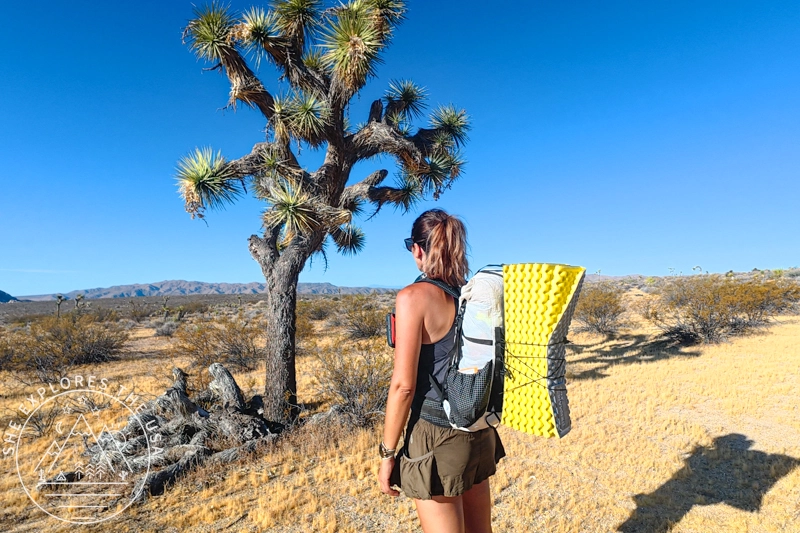
- External Attachment Points: Strapping gear (like a sleeping pad or camera tripod) to the outside of the pack saves main compartment space.
Is a 22L Backpack Right for an Overnight?
A 22L backpack isn’t going to work for every overnight trip. For me, it works when the conditions keep my gear requirements relatively simple.
For this type of summer desert trip, that usually means:
- Nighttime temperatures are warm enough that I can use my 55°F sleeping bag.
- The weather is dry and stable, so I don’t need to carry rain gear.
- I don’t need a bear canister or other bulky gear.
- I can keep the water requirements manageable.
Water is particularly important in Joshua Tree. I decide how far I’m willing to hike based partly on the expected temperature the next morning, since that affects both how comfortable I’ll be hiking back to the car and how much water I need to carry.
Packing List for 22L Overnight Backpacking
I don’t really pack differently just because I’m using a 22L backpack. The biggest difference between this summer setup and my colder-weather backpacking setup is the gear itself.
For summer trips, I can use my smaller and lighter Sea to Summit Women’s Flame Fm0 55°F sleeping bag instead of my Petrel UL 10 sleeping bag. I also usually leave the rainfly off my tent when the weather is dry.
Here’s what I carried on this trip.
Shelter
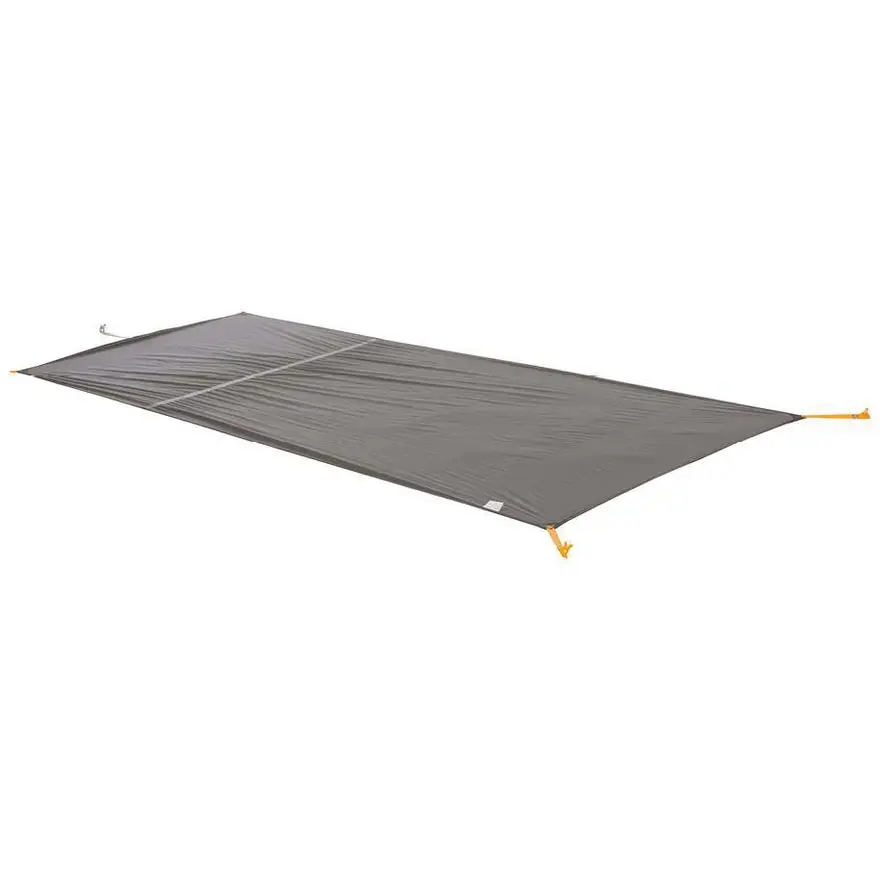
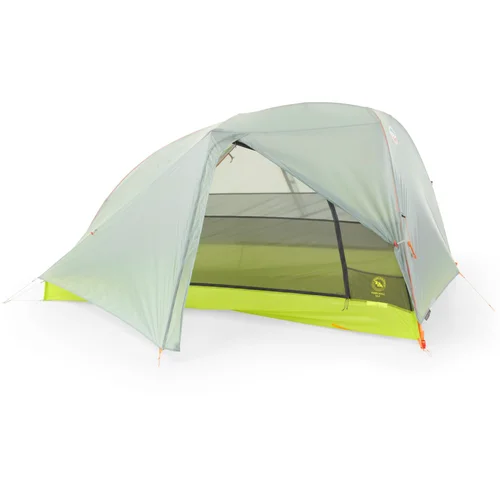
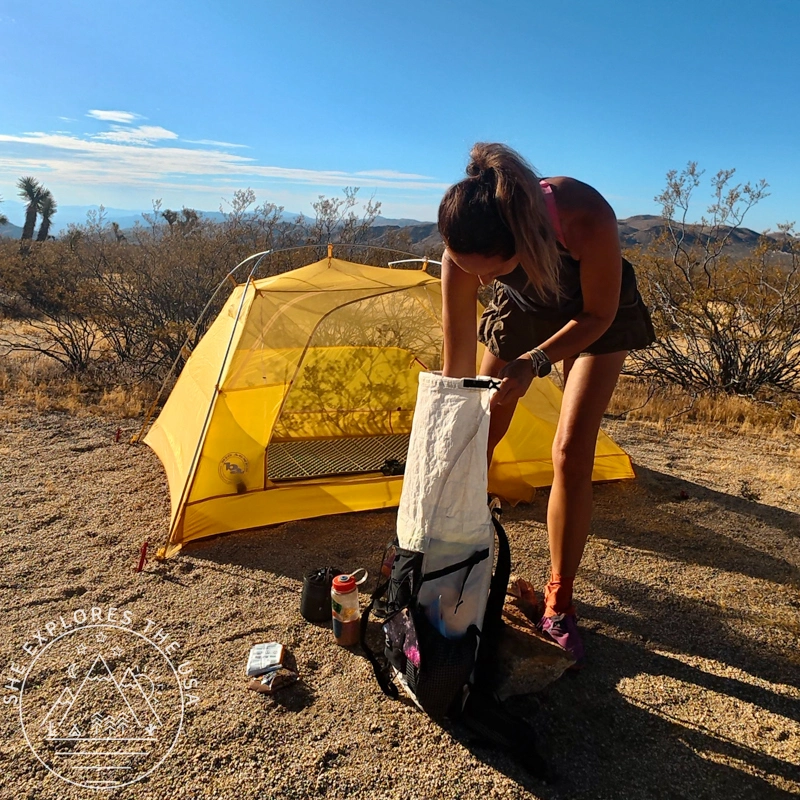
- Big Agnes Tiger Wall UL2 tent (minus the rainfly!)
- Tent footprint
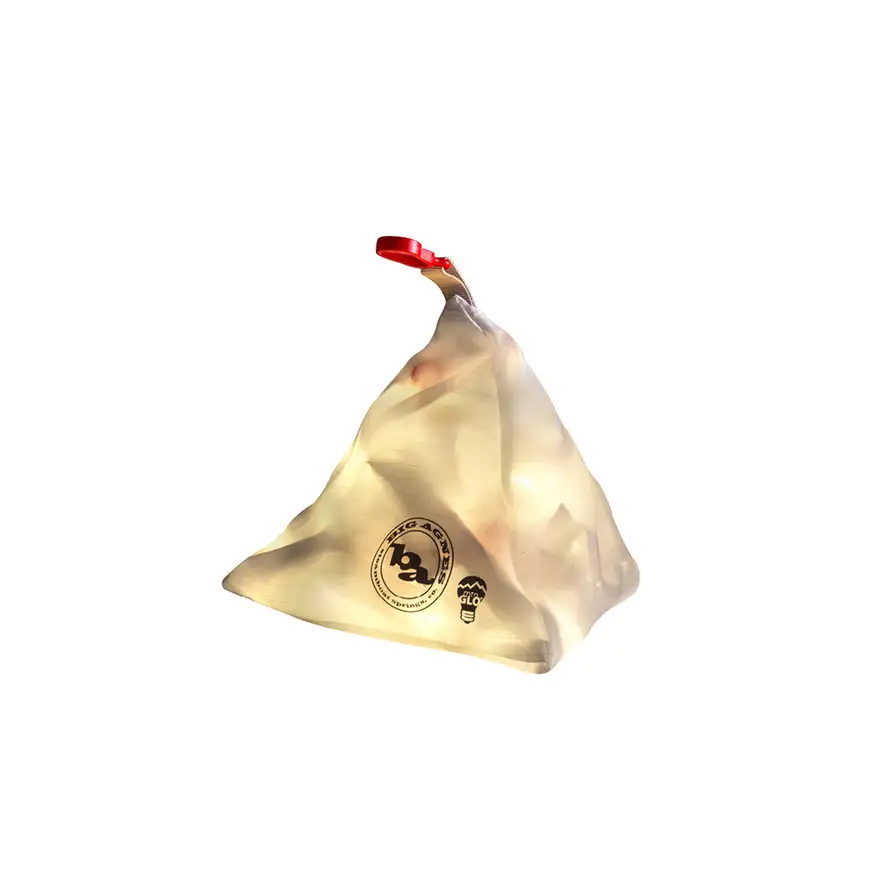
- MtnGlo Tent Lights
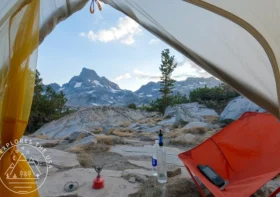
I love sleeping without the rainfly during summer. Being able to lie in the tent and watch the night sky is one of my favorite parts of camping in Joshua Tree.
I’ve occasionally done the same thing in winter, although I usually regret it the next morning when I wake up with frost on my sleeping bag and gear.
On clear nights, I can often see shooting stars, and I’ve even seen fireballs streak across the sky.
Sleeping System
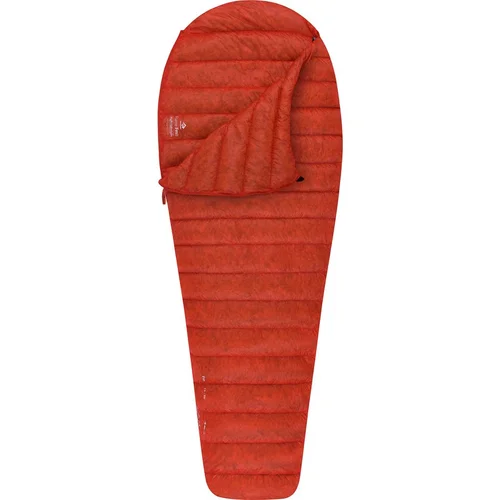
- Sea to Summit Women’s Flame Fm0 55°F sleeping bag
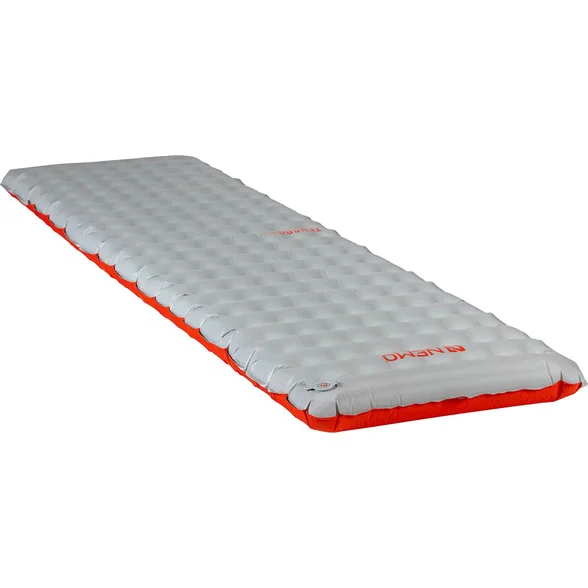
- Nemo Tensor Insulated sleeping pad
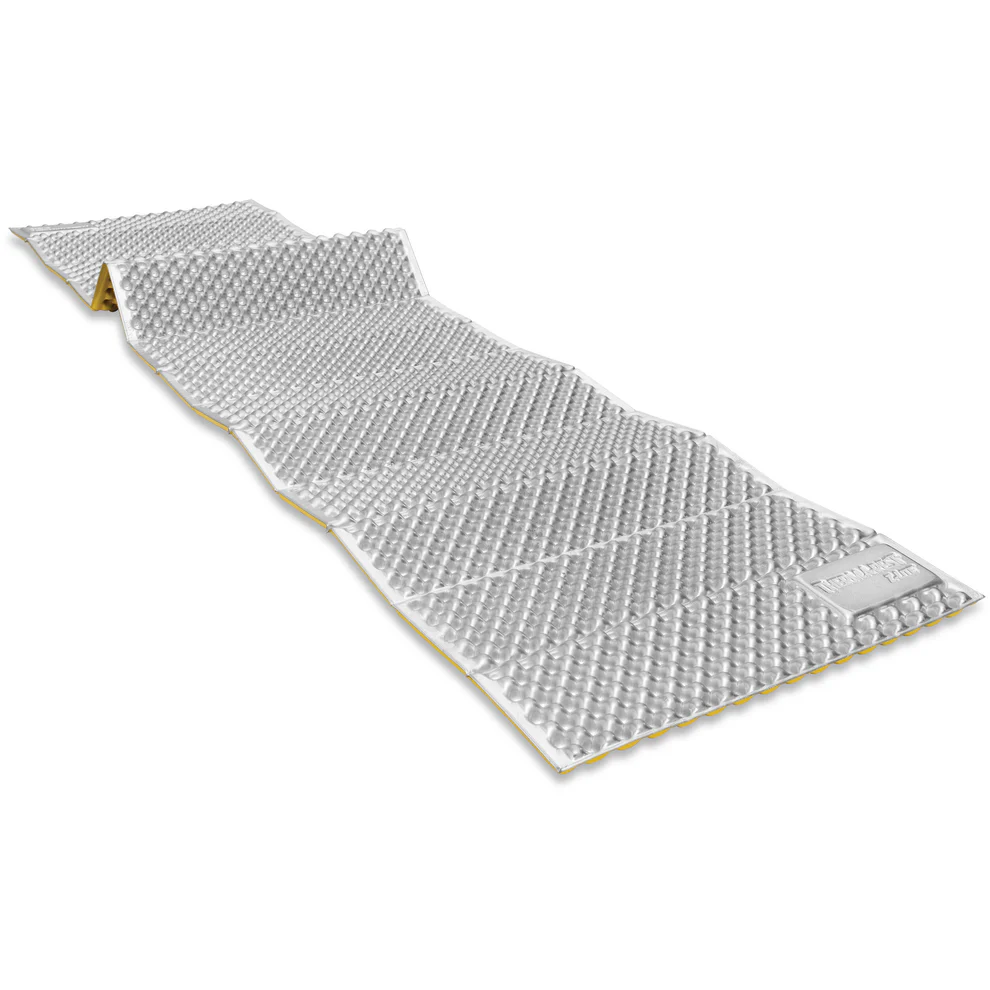
- Z Lite Sol pad
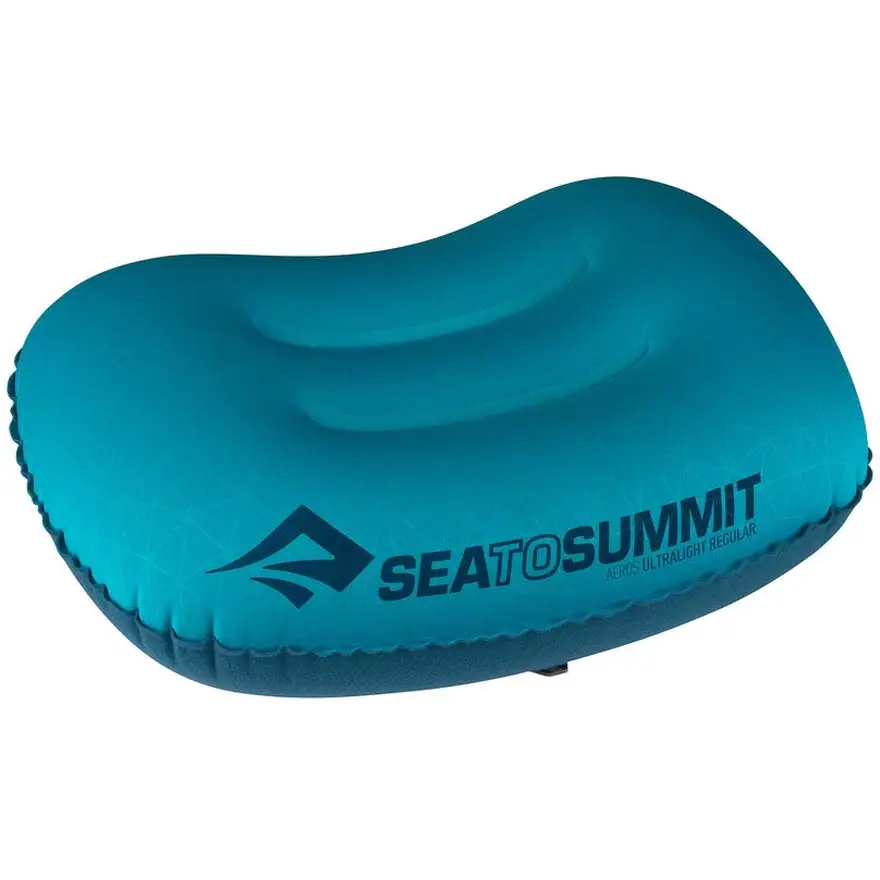
- Aero pillow
The 55°F sleeping bag is particularly useful for summer trips because it is much smaller and lighter than the warmer sleeping bags I use later in the year.
I can also use it as an extra layer inside my winter sleeping bag when temperatures are expected to drop below freezing.
Food and Cooking
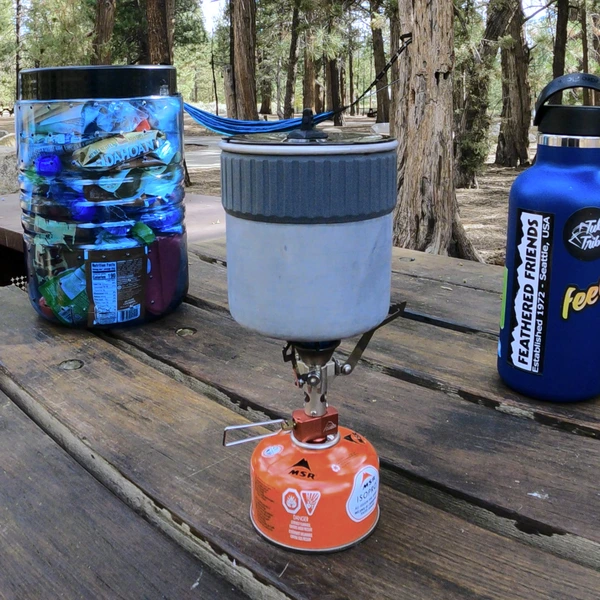
- MSR pocket stove kit
- Heather’s Choice Grass-Fed Beef Shepherd’s Pie
- Carnation Breakfast Essentials with oats
- Snacks
- Leftover truffle chips
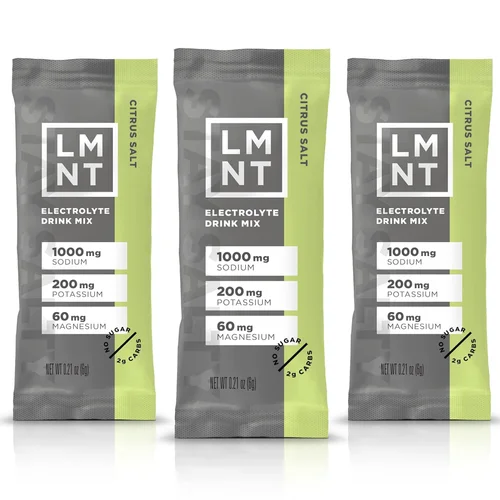
- LMNT electrolytes
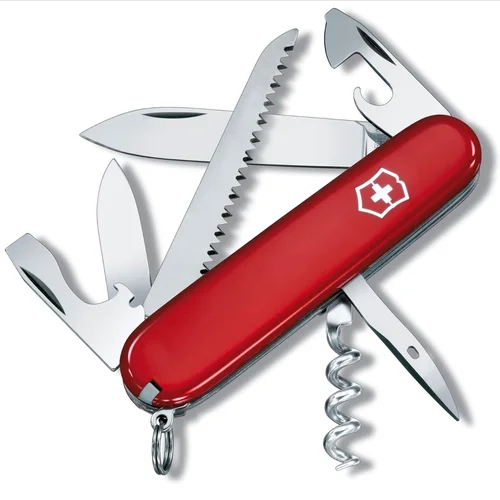
- Utility knife
Dinner was my last ever Heather’s Choice Grass-Fed Beef Shepherd’s Pie, as they’ve been discontinued, and I’m actually really sad about it! And while I waited for dinner to rehydrate, I ate some leftover truffle chips I took with me.
The next morning for breakfast, I mixed Carnation Breakfast Essentials with oats and cold water in my 16-ounce Nalgene.
Water
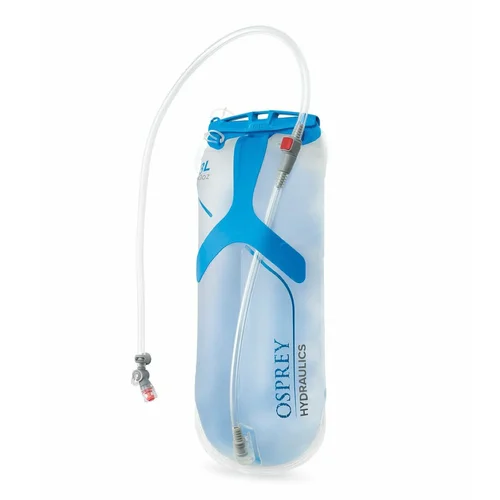
I carried 3 liters of water in my bladder, plus my 16-ounce Nalgene for breakfast and electrolytes.
I made sure I had enough water left for the hike back to my car, including in case the temperature climbed quickly the next morning. It was already over 90°F by 8 a.m. on this trip.
I also keep extra water in my car, so I have additional water waiting for me when I get back to the trailhead.
Clothes and Personal Items
I also packed:
- Fleece pajama bottoms (They were a little bulkier than my usual 250 merino bottoms, but my merino bottoms were in the wash!)
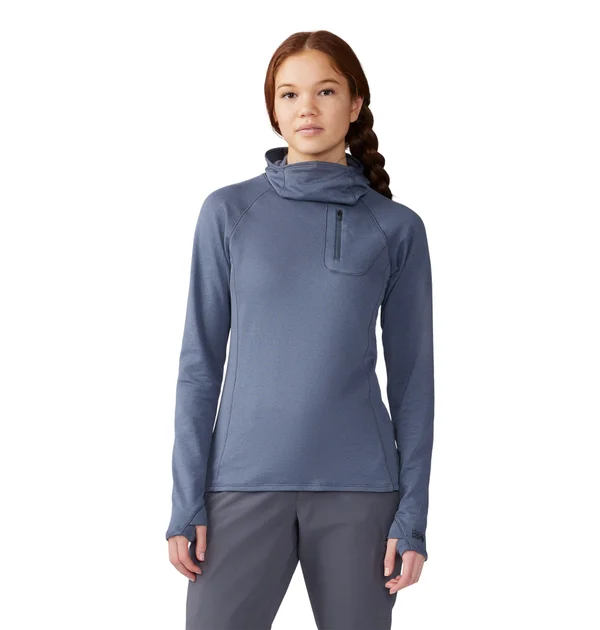
- Mountain Hardwear Hoodie (I only used it for sleeping and wore the hood instead of bringing a separate hat (I hate sleeping in a tent without something covering my head for some reason!)
- Sleep socks
- Minimal toiletries
- Nitecore headlamp
- Backcountry poop kit (trowel, hand sanitizer, etc)
- Collapsible mug
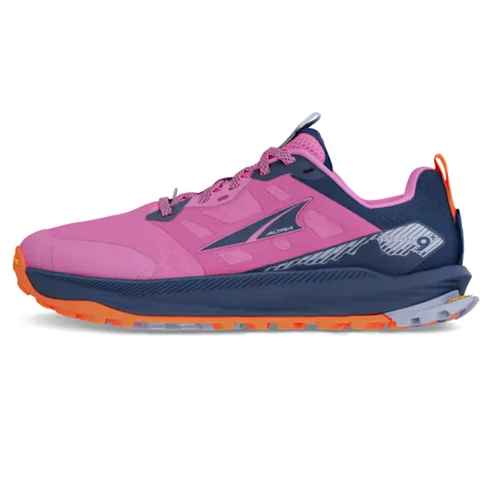
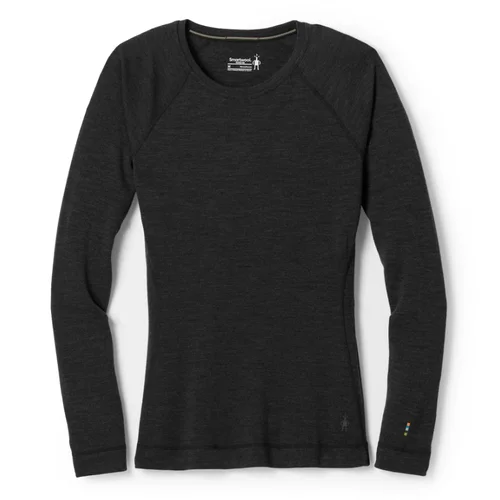
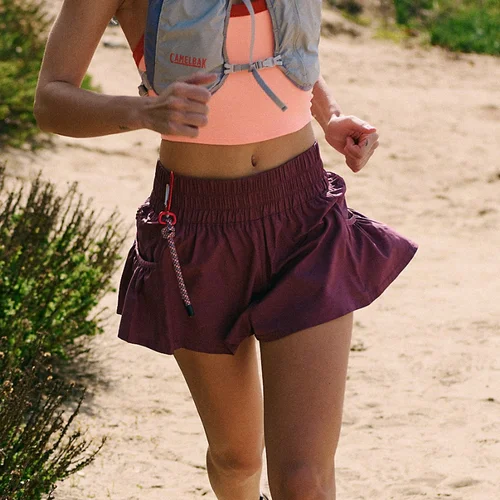
And I was wearing:

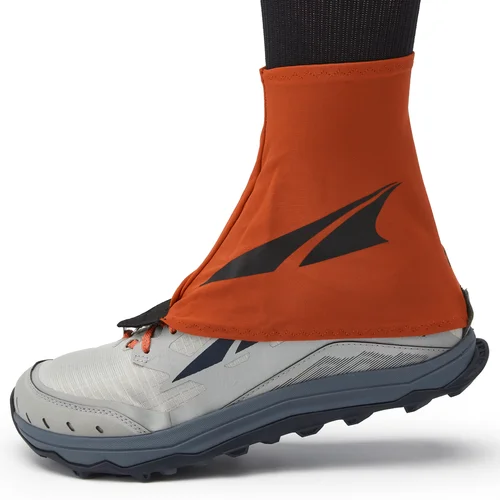
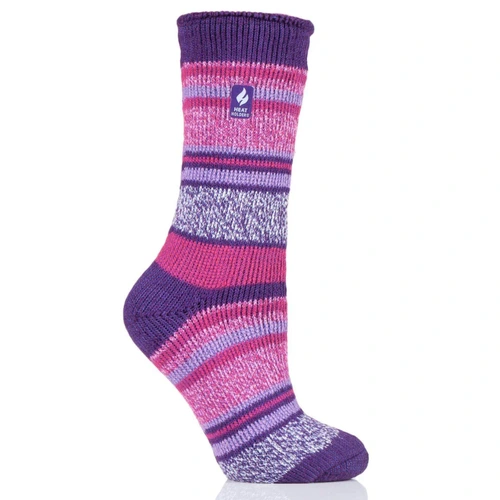
Electronics (Navigation, Communication and Camera Gear)
I was heading into an area without cell service, so my Garmin inReach was top of my pack list. I always go to Joshua Tree to photograph the night sky, so some of my camera gear comes with me.
This time, I packed:
- Anker 10K power bank (emergencies. I take the 20K one if I want to power my action cam for extended timelapses)
- Garmin GPSMAP 67i (read my review here!)
- Sony A7 IV with 24-70 GM II lens
- Capture Clip to carry the Sony
- DJI Action 5 Pro
- Spare batteries for Sony and DJI
- Tripod that works with both cameras
The Sony and some of the other gear were carried externally, so they didn’t take up space inside the main compartment of the backpack.
Get new post alerts, exclusive discounts, and a FREE backpacking checklist!
The One Thing I Wish I’d Packed
There was one thing I forgot that would have been useful and would have taken almost no room: my cooling towel.
I didn’t think to bring it, and with the temperature already over 90°F by 8 a.m., I definitely could have used it on the hike back to the car.
Don’t Miss My Full Hyperlite Elevate 22 Review
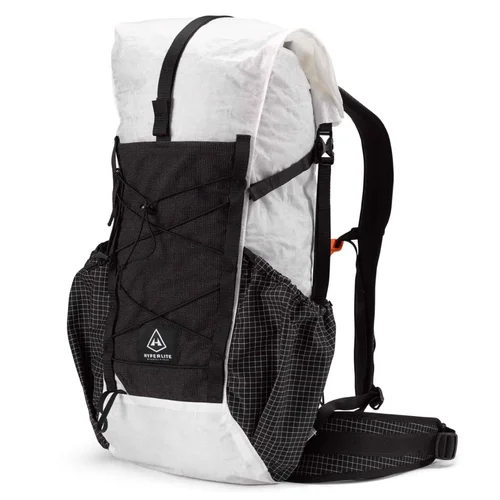
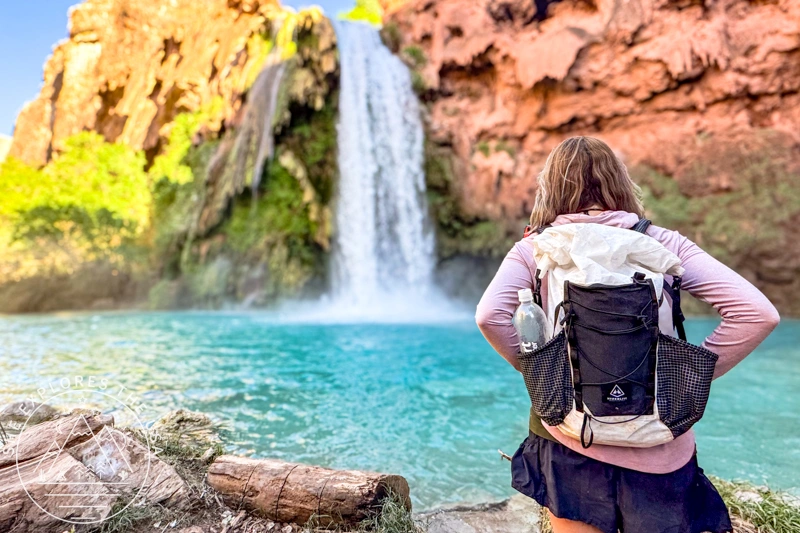
The Hyperlite Mountain Gear Elevate 22 is the pack I used for this trip. I normally use it as a day pack, but I’ve also used it for overnight trips like this one.
I’ve also written a detailed Hyperlite Elevate 22 review, where I cover the pack’s design, fit, features, and how it performs as a day pack.
Hyperlite Mountain Gear Elevate 22 Review
The Hyperlite Mountain Gear Elevate 22 has spent more than 18 months with me on day hikes, photography trips, and…
Why 22L Overnight Backpacking Works for Summer Desert Trips
My usual 58L backpack makes sense when I actually need that much space, such as when I’m carrying multiple days of food, a bear canister, a 10°F sleeping bag, or some combination of those things.
But for a warm summer overnight, I don’t need that much gear.
My shelter and sleeping system are compact, and everything else I need fits in the HMG Elevate 22. Some of the larger items, including my camera and tripod, can be carried externally.
The smaller pack also weighs less than my 58L backpack, which makes sense for a short summer trip where I don’t need the additional capacity.
How to Pack for a 22L Overnight Backpacking Trip
Here’s how I packed the Elevate 22 for this trip:
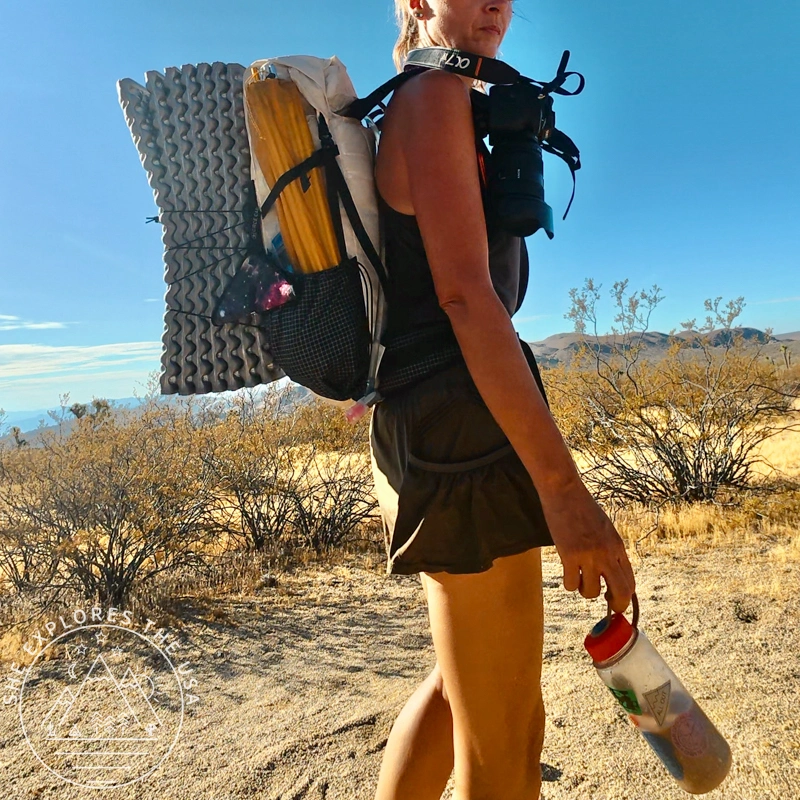
- Main Interior Compartment: 3L water bladder (with hose out!), 55°F sleeping bag, sleeping pad, sleep clothes, toiletries, food, stove kit, electronics bag and inner tent canopy directly on top so it can come out first when I get to camp.
- Exterior Mesh Pocket: Poop kit, headlamp, tent stakes.
- Side Pockets: Tent poles, tripod with action cam attached.
- Shoulder Straps: Garmin inReach, Sony A7 IV (via Capture Clip), nalgene with a carabiner.
- Exterior Elastics: Z Lite Sol sleeping pad strapped to the outside.
- Gear Loops: pee cloth
FAQ: 22L Overnight Backpacking
How Much Did My 22L Backpack Weigh?
At the beginning of the trip, my pack weighed 15.9 pounds without the Sony camera but with the 3L of water.
How Comfortable Was the Elevate 22 Pack?
I normally use the Elevate 22 as a day pack, so it usually carries less weight than it did on this overnight.
When I load it up for an overnighter, I adjust the straps slightly so the pack sits better on my hips. Once I make that adjustment, I find it comfortable to carry, and I didn’t have any discomfort in my shoulders, hips, or anywhere else on this trip.
If you’re using a smaller backpack for both day hikes and overnight trips, you may find that you need to adjust the fit when you’re carrying more weight than usual.
What can you fit when 22L overnight backpacking?
For the type of overnight trip I was doing, my 22L backpack held everything I needed, including my shelter, sleeping system, food, water, clothing, toiletries, safety gear, and camera equipment.
Some of the bulkier items were carried externally, including my camera and Z sol pad.
That doesn’t mean 22L is enough for every overnight trip. The amount of space you need depends heavily on the conditions and the gear you have to carry.
A warm-weather overnight with a compact sleeping bag is very different from a cold-weather trip with a bulky sleeping bag. Carrying food for one night is different from carrying food for several days, and carrying three liters of desert water is very different from hiking somewhere with reliable water sources along the trail.
Your gear and the conditions ultimately determine how much pack capacity you need.
When is 22L overnight backpacking realistic?
For me, a 22L backpack works particularly well for warm-weather overnight trips where I can use my 55°F sleeping bag and don’t need much additional clothing or bulky gear.
There are plenty of situations where I’d use my larger backpack instead.
If temperatures are cold enough that I need a much warmer sleeping bag, I’ll need more space. The same is true if I’m carrying more food, more water, or additional gear.
Would I go 22L overnight backpacking again?
Yes. I’ve used my 22L pack for overnight trips before, and I’ll continue to use it when the conditions and gear requirements make sense for it.
My 22L overnighters are generally warm-weather desert trips. I know the area, I know the gear I want to bring, and I have a good idea of what conditions to expect.
I also make sure I have enough water for the hike back to my car, with additional water and supplies waiting for me there.
For this type of trip, a 22L pack gives me enough room for what I actually need without carrying a larger pack just for the extra capacity.
Final Thoughts on 22L Overnight Backpacking
A 22L backpack works well for my summer overnight trips in the desert because my gear is relatively compact and I don’t need the gear that takes up a lot of space in colder or longer backpacking trips.
It isn’t the pack I’d choose for every overnight. But when I’m heading out for one warm night, carrying a compact sleeping system, and don’t need a lot of extra gear, 22L is enough for everything I want to bring.
The important thing isn’t the number of liters on the pack. It’s whether the pack has enough room for the gear, food, and water you actually need for the trip you’re taking.
Post originally published on September 19, 2026, and last updated on October 9, 2026.