Olympic National Park Itinerary With Twilight Detour

DISCLOSURE: This post may contain affiliate links. If you purchase after clicking one of my links, I may earn a small commission at no extra cost to you. As an Amazon Associate, I earn from qualifying purchases. For more information, see my disclaimer.
Olympic National Park is one of the most diverse national parks in the U.S., combining three distinct ecosystems: temperate rainforest, rugged Pacific coastline, and alpine mountains. This 4-day Olympic National Park itinerary covers where to stay, the best hikes, what to expect from the weather, and a few Twilight filming locations in Forks, Washington, along the way.
This post picks up as Day 4 of my Washington trip, right where my Mount Rainier itinerary left off, and includes my gear list, a day-by-day trip diary, AllTrails links for each hike, and everything you need to plan your own Olympic Peninsula adventure. (Planning only the Olympic portion? Everything below works as a standalone itinerary too.)
- Olympic National Park Trip Overview
- Gear That Saved My Olympic National Park Trip
- My 4 Day Olympic National Park Itinerary
- Day 1: Lake Quinault, Pacific Coast, and Sunset at Rialto Beach
- Day 2: La Push Beaches & Hoh Rainforest Hiking
- Day 3: Cape Flattery, Shi Shi Beach, Sol Duc Falls & Lake Crescent
- Day 4: Madison Falls & Hurricane Ridge Hiking
- Frequently Asked Questions About Olympic National Park
- Final Thoughts About this Olympic National Park Itinerary
Olympic National Park Trip Overview
- Dates visited: June 30–July 4
- Duration: 5 days, 4 nights
- Where I stayed: 2 nights in Forks, 2 nights in Port Angeles
- Weather: Rain, fog, and torrential downpours on the coast, but clear alpine skies above the clouds at Hurricane Ridge
- Best surprise: Being welcomed to Hurricane Ridge by a bear and standing above the clouds at high elevation, right after driving through miserable rain and fog in Port Angeles
- Would I visit again? Absolutely
Hikes taken at Olympic National Park
- First Beach
- Second Beach
- Hall of Mosses Trail
- Spruce Nature Trail
- Cape Flattery Trail
- Sol Duc Falls Trail
- Marymere Falls Trail
- Madison Falls Trail
- Hurricane Hill Trail
Gear That Saved My Olympic National Park Trip
I got a lot of wet weather at Olympic National Park, and layers were obviously the best way to be ready for any weather situation.
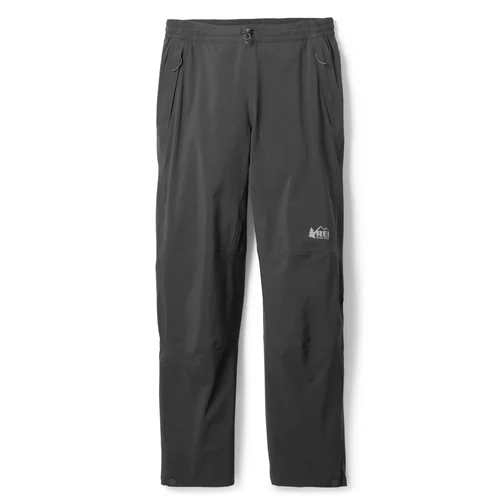
XeroCloud 3L Rain Pants
These XeroCloud 3L Rain Pants were my most prized possession on this trip. With several days of rain and wet trails, having waterproof pants meant I could still enjoy hiking instead of spending the entire day soaked. These were one of the best decisions I made for this trip.
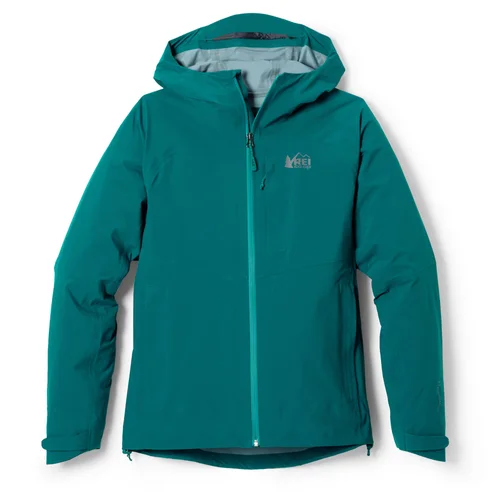
Rain Jacket
My rain jacket is the previous version of the XeroCloud Rain Jacket. I love that they have zips under the armpits to keep ventilation flowing, so I don’t drown in sweat. It’s lightweight, easy to pack away, and most importantly, kept me dry every day!!
Hiking Shoes and Gaiters
I wore my Altra Lone Peak 9+ trail shoes for this trip. They are not waterproof, so my feet did get wet, but they also dried quickly, which worked well for me. I also wore gaiters, which helped keep rain, mud, and debris out of my shoes while hiking through wet trails and snowy sections.
Backpack and Navigation
My Hyperlite Mountain Gear Elevate 22 backpack was perfect for this trip because it also works like a dry bag. I love that it is ultralight, which means I can carry heavier camera gear without adding unnecessary weight from the backpack itself. The Dyneema fabric also helped protect my Sony camera, lenses, and electronics from the constant rain. With the constant rain, having extra protection for my gear gave me peace of mind.
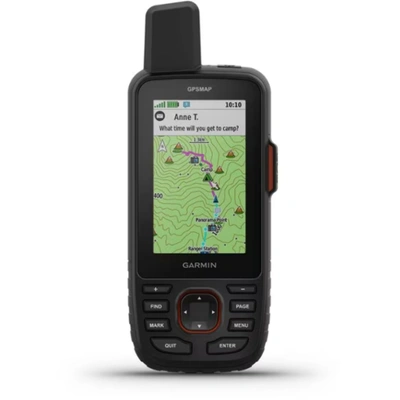
I also carried my Garmin GPSMAP 67i for navigation and safety while exploring the park.



Camera Gear
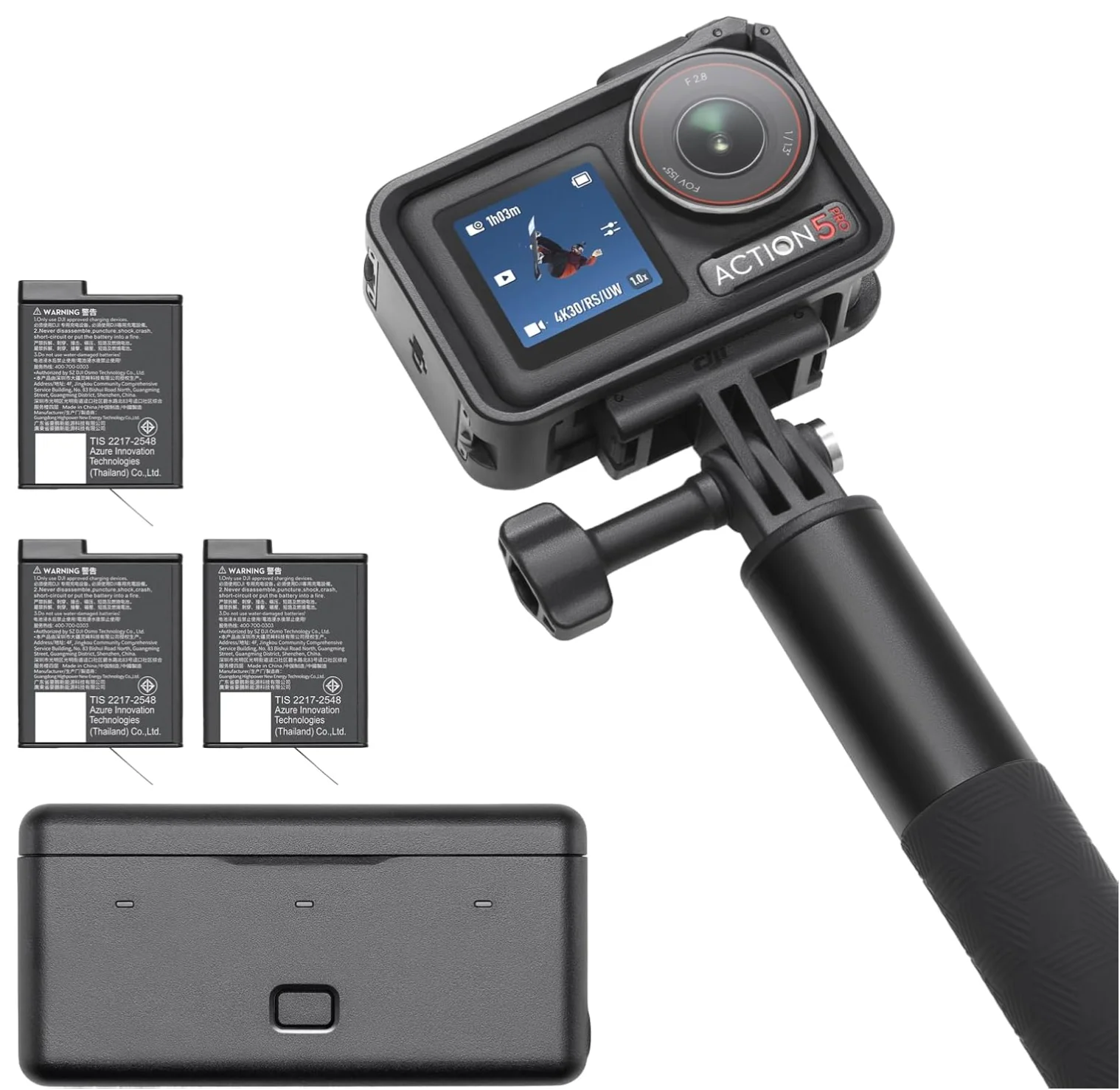
I brought my Sony A7 IV with the 24-70mm GM II, 70-200mm GM II, and 1.4x converter. However, because of the rain at Mount Rainier, I didn’t use it nearly as much as I expected. Most of my photos and videos came from my iPhone and DJI Action 5 Pro instead.
Looking back, the most useful item I should have bought before the trip would have been a waterproof shell camera cover for my Sony A7 IV. Having one would have made me more comfortable taking the camera out in the rain.





My 4 Day Olympic National Park Itinerary
| Day | Location | Highlights |
|---|---|---|
| Day 1 | Lake Quinault → Forks → Pacific Coast | Sitka spruce, Merriman Falls, Tree of Life, Rialto Beach sunset |
| Day 2 | La Push + Hoh Rain Forest | First Beach, Second Beach, Twilight Museum, Hall of Mosses |
| Day 3 | Cape Flattery + Shi Shi Beach + Port Angeles | Coastal views, Sol Duc Falls, Marymere Falls |
| Day 4 | Hurricane Ridge | Madison Falls, alpine views, Hurricane Hill hike, wildlife |

Adventure Travel Insurance
Adventure Travel Insurance for USA Hiking and Backpacking: Get Your Free Quote Adventure travel insurance is important for hikers and backpackers, because standard travel insurance may limit coverage for outdoor activities or higher elevations. Most…
Day 1: Lake Quinault, Pacific Coast, and Sunset at Rialto Beach
After leaving Mount Rainier National Park, I continued west toward the Olympic Peninsula. The rain that had followed me through Mount Rainier was still hanging around, but I was excited to start exploring a completely different side of Washington.
My first stop was Lake Quinault, located on the southwest side of the peninsula. This area is surrounded by old-growth rainforest, towering trees, and scenic drives through some of Olympic’s lushest landscapes.
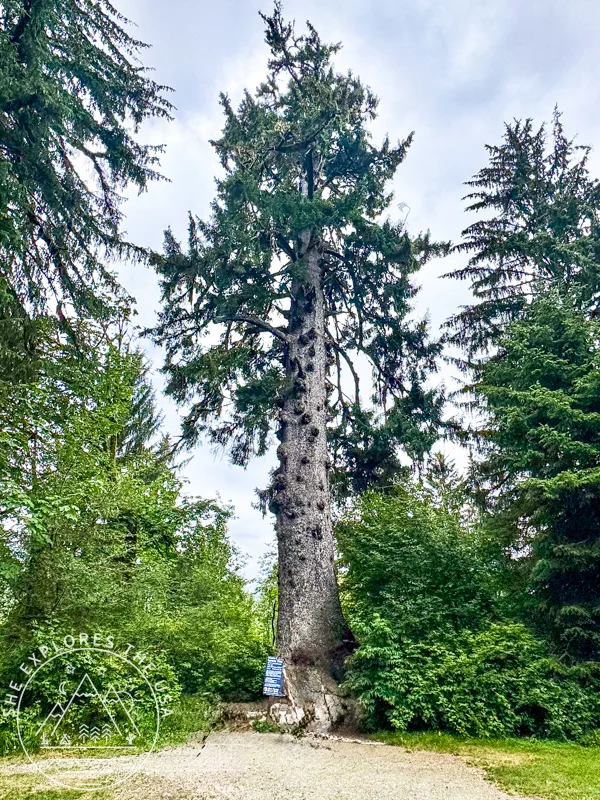
I stopped to see the world’s largest Sitka spruce before continuing to Merriman Falls, an easy roadside waterfall stop surrounded by dense greenery.
From there, I made my way toward the Pacific Coast, stopping at Beach 1 and the famous Tree of Life near Kalaloch. The coastline here is wild and dramatic, with massive driftwood logs, crashing waves, and the kind of scenery that makes you realize how powerful the Pacific Ocean really is.
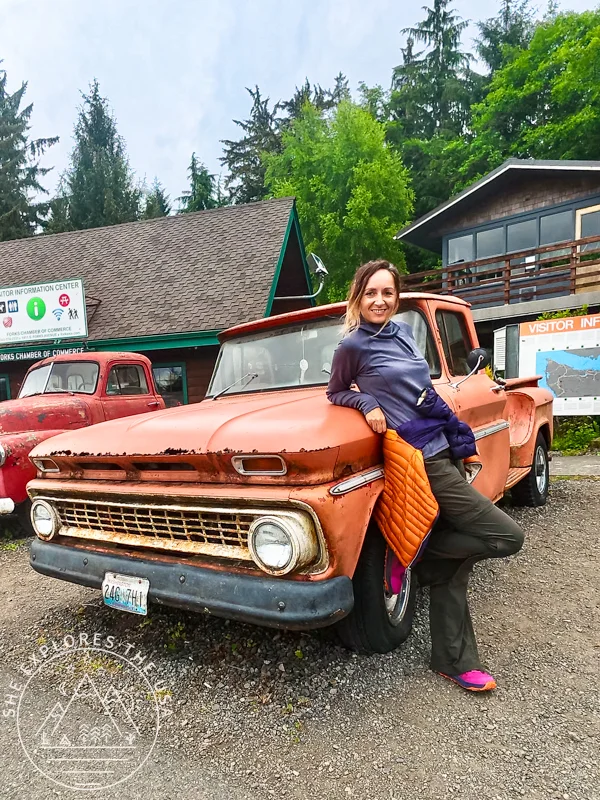
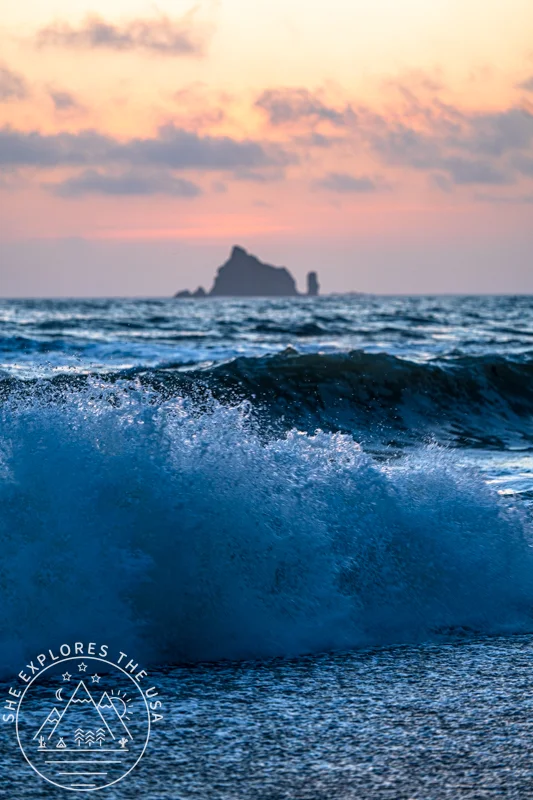
After arriving in Forks and checking into my hotel, I explored some of the town’s Twilight landmarks, including the welcome sign and Bella’s truck, before heading out again to catch sunset at Rialto Beach. The Pacific Ocean here is powerful, with waves crashing against the rocky shoreline and enormous driftwood scattered across the beach. Watching the sun disappear over the water was one of those simple travel moments that makes a long driving day completely worth it.
Day 2: La Push Beaches & Hoh Rainforest Hiking
Day two started on the Pacific Coast near La Push, an area famous for dramatic beaches, coastal scenery, and, for Twilight fans, the fictional boundary between vampire and werewolf territory.
I started walking around First Beach, then continued to Second Beach, one of the most popular coastal hikes in Olympic National Park.
Second Beach requires a short forest hike before opening up to one of Olympic’s most impressive coastal landscapes. The trail winds through dense forest before reaching a sandy beach framed by sea stacks and crashing waves.
After exploring the beaches, I headed back to Forks for lunch and to visit the Twilight Museum before driving to one of the Olympic Peninsula’s most famous areas: the Hoh Rain Forest.
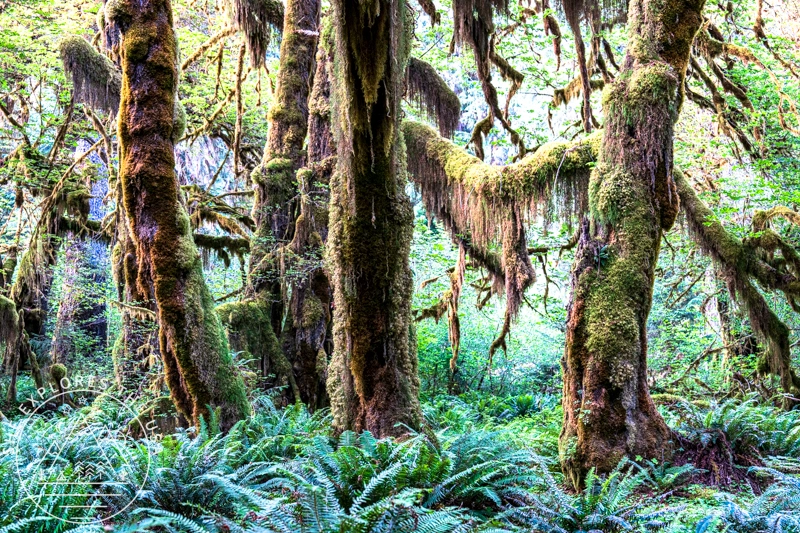
The Hoh Rain Forest is one of the best examples of a temperate rainforest in the United States, with enormous trees covered in moss and a landscape that feels almost prehistoric.
After hiking, I returned to Forks for the night.
Hall of Mosses Trail, Olympic National Park
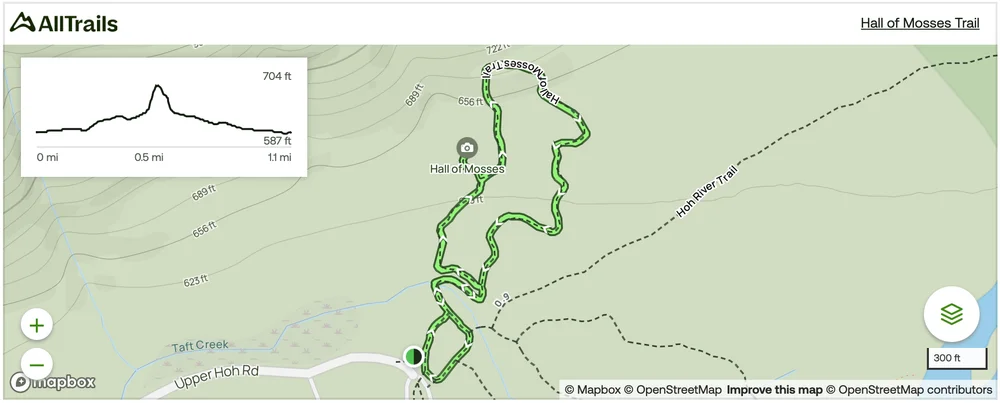
Distance: 1.1-mile loop
Elevation gain: 82 ft
Difficulty: Easy
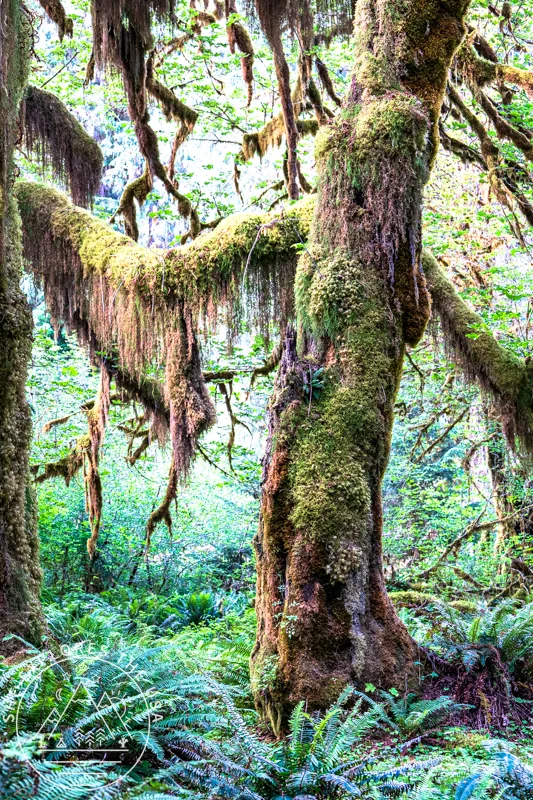
The Hall of Mosses Trail in Olympic National Park is one of the most iconic rainforest hikes in Washington. This short loop takes you through the Hoh Rain Forest, with towering old-growth trees, moss-covered branches, and a landscape that feels straight out of a fairytale.
Hall of Mosses Trail AllTrails map
🥾 Plan Smarter Hikes with AllTrails
AllTrails is my go-to for trip planning, from checking trail reviews to downloading maps, navigating from my phone, and sending routes straight to my Garmin 67i. Offline maps, alerts, and AI route planning make upgrading to Plus & Peak worth it!
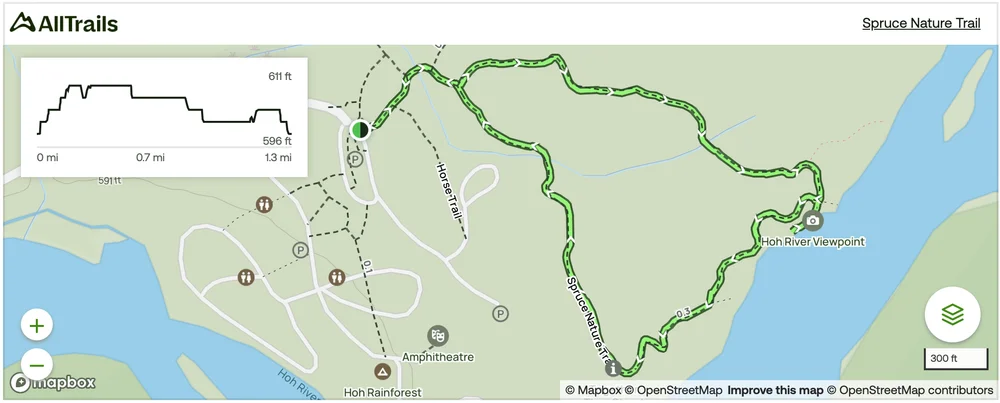
Spruce Nature Trail
Distance: 1.4 miles loop
Elevation gain: 16 ft
Difficulty: Easy
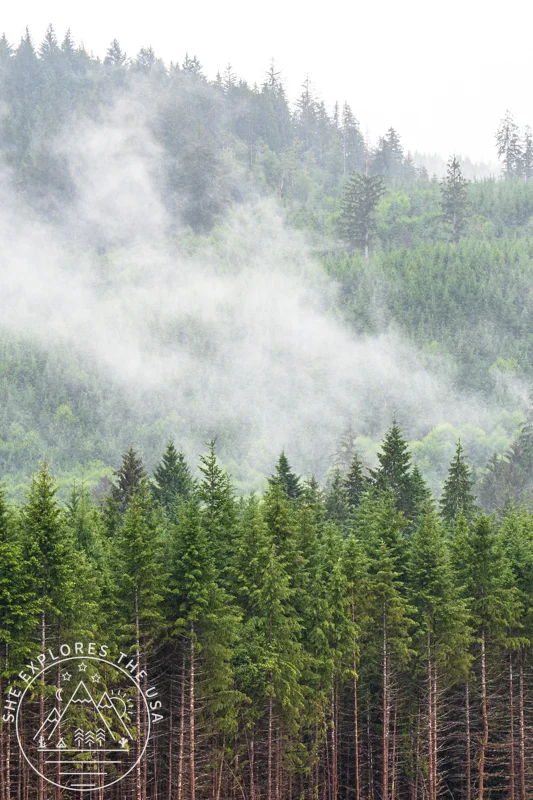
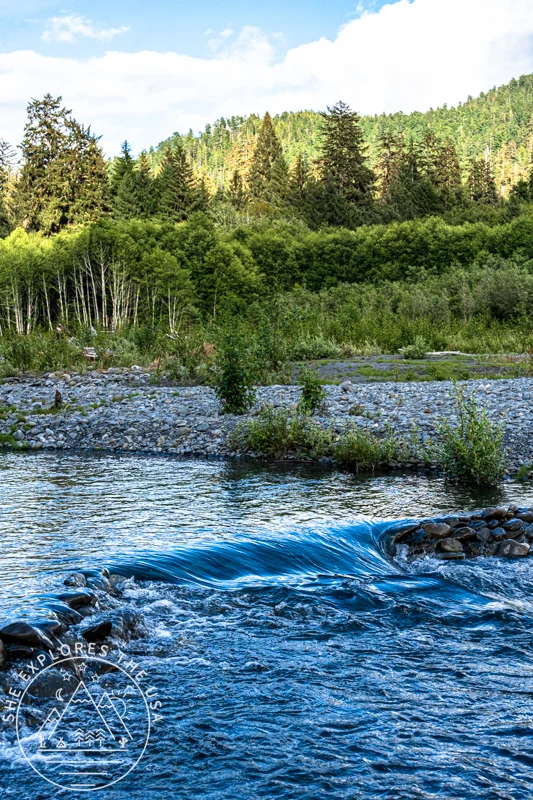
The Spruce Nature Trail in Olympic National Park is an easy rainforest loop that pairs perfectly with the Hall of Mosses. The trail passes through old-growth forest, alongside the Hoh River, and showcases the famous nurse logs where new trees grow from fallen giants.
Spruce Nature Trail AllTrails map
Day 3: Cape Flattery, Shi Shi Beach, Sol Duc Falls & Lake Crescent
Day three was a fairly long driving day, covering some of the most remote and scenic areas of the Olympic Peninsula.
I started by heading north toward Cape Flattery, the northwesternmost point of the contiguous United States.
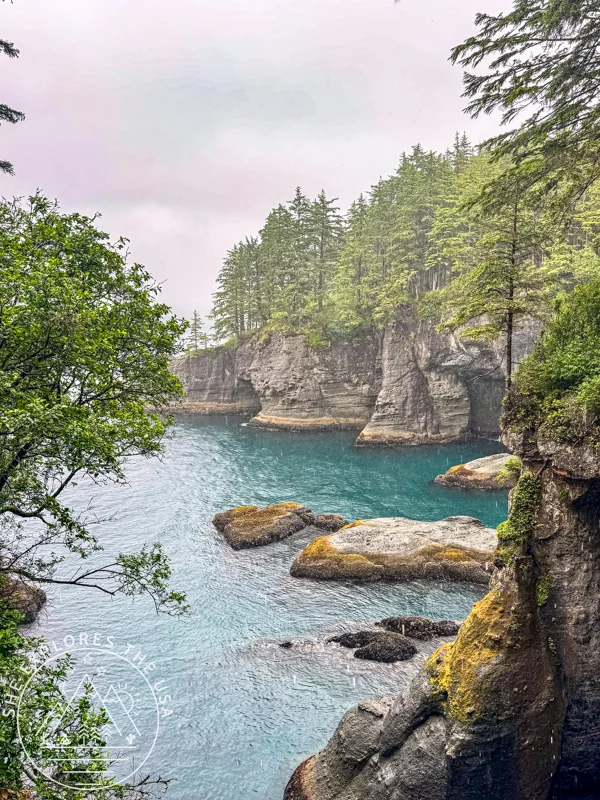
The short trail to Cape Flattery leads through coastal forest before opening up to incredible views of rugged cliffs, sea stacks, and the meeting point of the Pacific Ocean and Strait of Juan de Fuca. Watch this reel to experience it now!
Even in heavy rain, the scenery was spectacular.
From Cape Flattery, I continued toward Shi Shi Beach, one of the more remote beaches on the Olympic Peninsula.
This area feels completely wild, with fewer crowds and dramatic coastal scenery. The hike is longer and more challenging than some of Olympic’s other beaches, but the payoff is a beautiful stretch of coastline that feels far removed from civilization.
After exploring the coast, I drove east toward Port Angeles, stopping for two waterfall hikes along the way. The drive along Lake Crescent was beautiful, with fog rolling over the mountains and the lake surrounded by deep green forest.
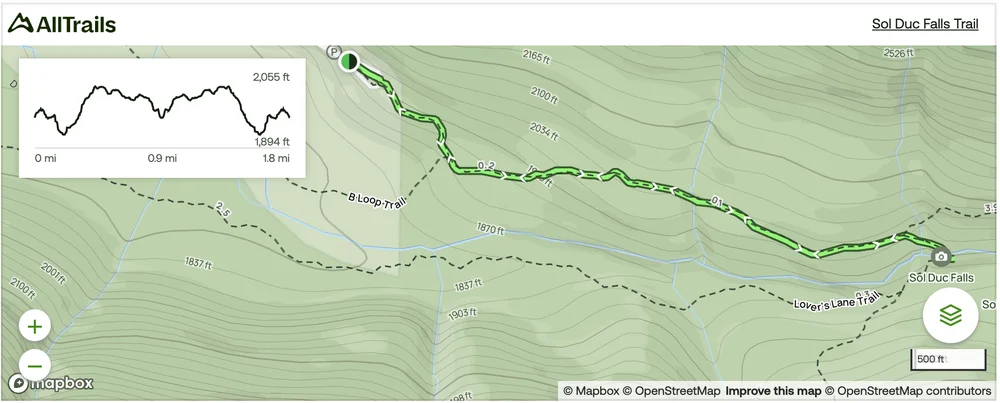
Sol Duc Falls Trail
- Distance: 1.6 miles round trip
- Difficulty: Easy
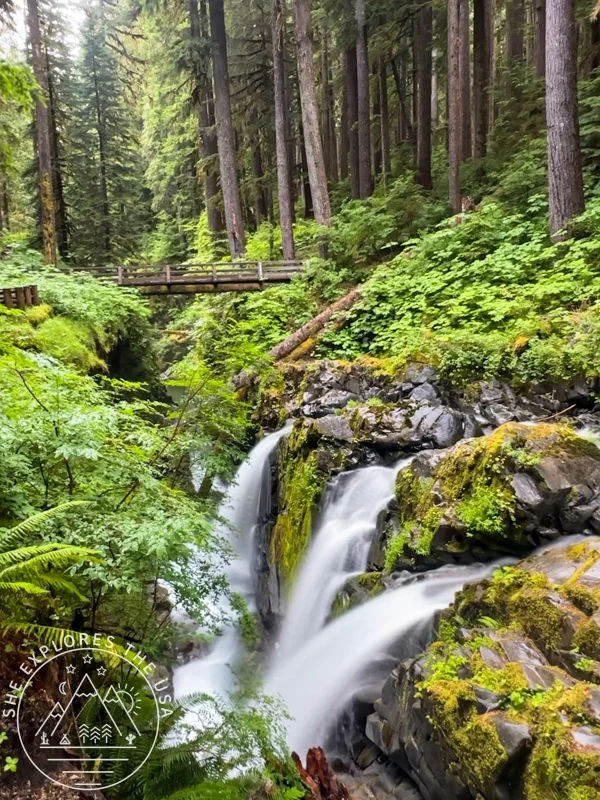
Sol Duc Falls is one of Olympic National Park’s most famous waterfalls. The trail winds through moss-covered forest before reaching a powerful waterfall cascading through multiple channels.
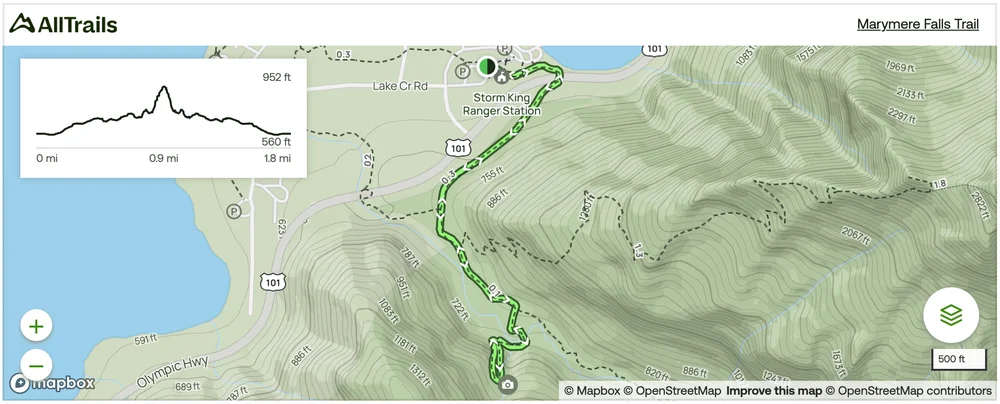
Marymere Falls Trail
- Distance: 1.8 miles round trip
- Difficulty: Easy
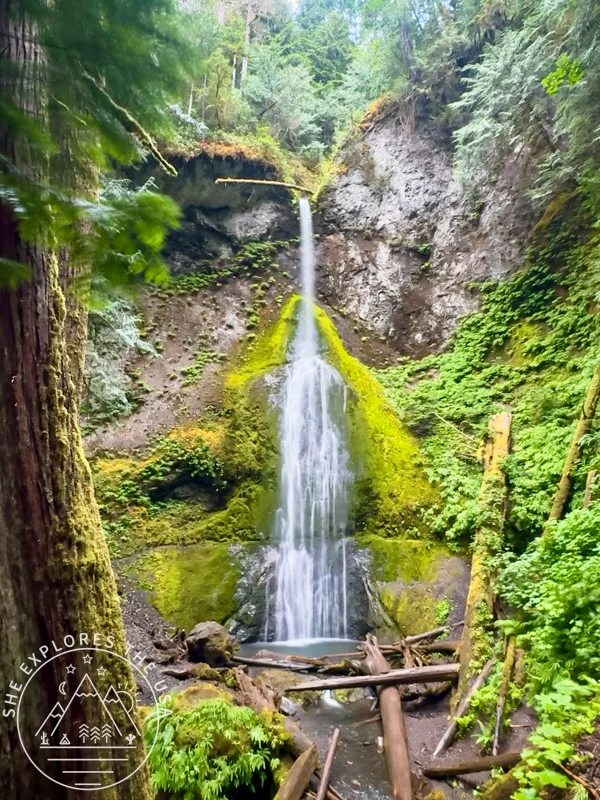
Marymere Falls is a classic Olympic waterfall hike near Lake Crescent. The trail climbs through old-growth forest to a viewpoint overlooking the falls.
Day 4: Madison Falls & Hurricane Ridge Hiking
My last full day exploring Olympic National Park began near Port Angeles with a quick stop at a waterfall before heading into the mountains.
Madison Falls is a short, easy trail through lush forest to a beautiful waterfall. It’s worth adding if you’re already exploring the Port Angeles side of Olympic National Park.
After Madison Falls, I attempted to visit the Elwha Dam overlook, but the bridge over the river had washed out, making it difficult to continue without getting wet in a river crossing, so I headed toward Hurricane Ridge.
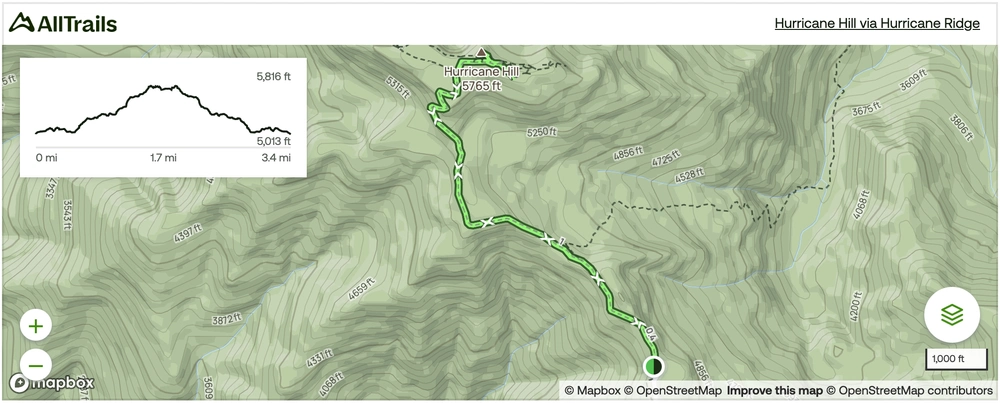
Hurricane Ridge & Hurricane Hill Trail
Distance: 3.5 mi
Difficulty: Moderate
Port Angeles was rainy and foggy, but before driving up, I checked the Hurricane Ridge webcam, which showed blue skies at the parking lot. I decided to take my chances.
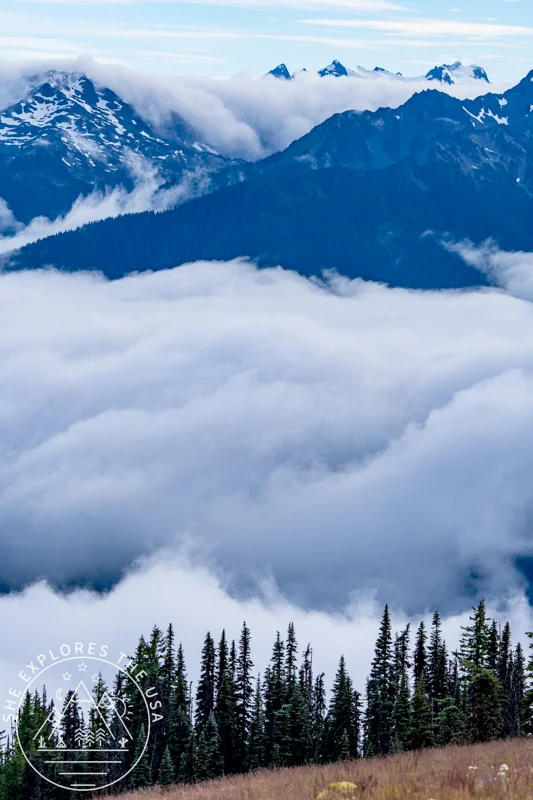
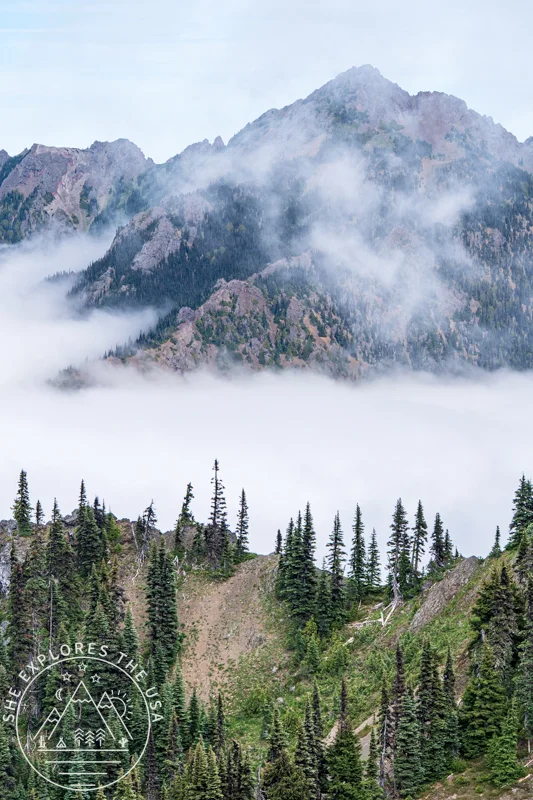
The drive up was surreal. I could barely see the car in front of me through the fog, then suddenly I was above the clouds. The rain disappeared, the sky turned blue, and before I even reached the parking lot, I spotted a bear.
Hurricane Hill was one of my favorite hikes of the trip, with alpine views, constantly changing weather, and plenty of wildlife. Clouds rolled in and out throughout the hike, and I saw numerous deer and bucks along the trail.
Planning tip: Hurricane Ridge uses a metered entry system during busy periods. Rangers release vehicles gradually at the entrance kiosk to manage parking at the top. Allow extra time for the wait, but once you get through, parking is usually much easier.
After exploring more viewpoints, I headed back to Port Angeles for dinner at Bella Italia, the Twilight-famous restaurant. I couldn’t leave without trying Bella’s mushroom ravioli.
The next day, I discovered there had been a solar flare event that night, and there was a chance of seeing the northern lights from Hurricane Ridge. I never saw any reports of sightings, and clouds likely moved in later, but it was a fun surprise to discover afterward.



Frequently Asked Questions About Olympic National Park
How many days do you need for Olympic National Park?
In my opinion, 3 full days allow you to see the highlights of Olympic National Park, including the rainforest, coastline, and mountains. The park is huge, so having enough time helps avoid spending your entire trip driving between locations.
Where should you stay for an Olympic National Park itinerary?
For this itinerary, I stayed in Forks and Port Angeles. Forks is ideal for the Hoh Rain Forest, La Push, Rialto Beach, and Cape Flattery, while Port Angeles is better for Hurricane Ridge, Lake Crescent, Sol Duc Falls, and Marymere Falls.
What is the best time to visit Olympic National Park?
Summer generally offers the best weather and longest days, but rain is still common. Pack for wet weather even in July, especially if you plan to explore the coast or rainforest.
Do you need a car for Olympic National Park?
Yes. The park spans across the Olympic Peninsula, and having your own vehicle is the easiest way to reach the different areas.
What are the must-see places in Olympic National Park?
The highlights from this itinerary include:
- Hoh Rain Forest
- Rialto Beach and La Push beaches
- Cape Flattery
- Sol Duc Falls
- Lake Crescent
- Hurricane Ridge
Is Hurricane Ridge worth visiting?
Yes. Hurricane Ridge offers a completely different landscape from the rainforest and coastline, with alpine views, wildlife, and mountain scenery. Just be prepared for changing conditions, as the weather can be completely different from lower elevations.
Final Thoughts About this Olympic National Park Itinerary
Olympic National Park completely exceeded my expectations. I loved how different each part of the peninsula felt, from the wild Pacific coastline to the moss-covered rainforest and the alpine scenery at Hurricane Ridge. The weather was definitely unpredictable, but honestly, it added to the adventure. Driving through rain and fog before suddenly ending up above the clouds at Hurricane Ridge was one of my favorite moments of the trip.
I would absolutely come back to Olympic National Park. There is still so much more to explore, and I’d happily spend more time hiking the trails and discovering more of this incredible corner of Washington.
Mount Rainier National Park Itinerary in Bad Weather
My Mount Rainier National Park adventure turned out very differently from what I imagined. After days of […]…
Post originally published on August 1, 2026, and last updated on October 17, 2026.